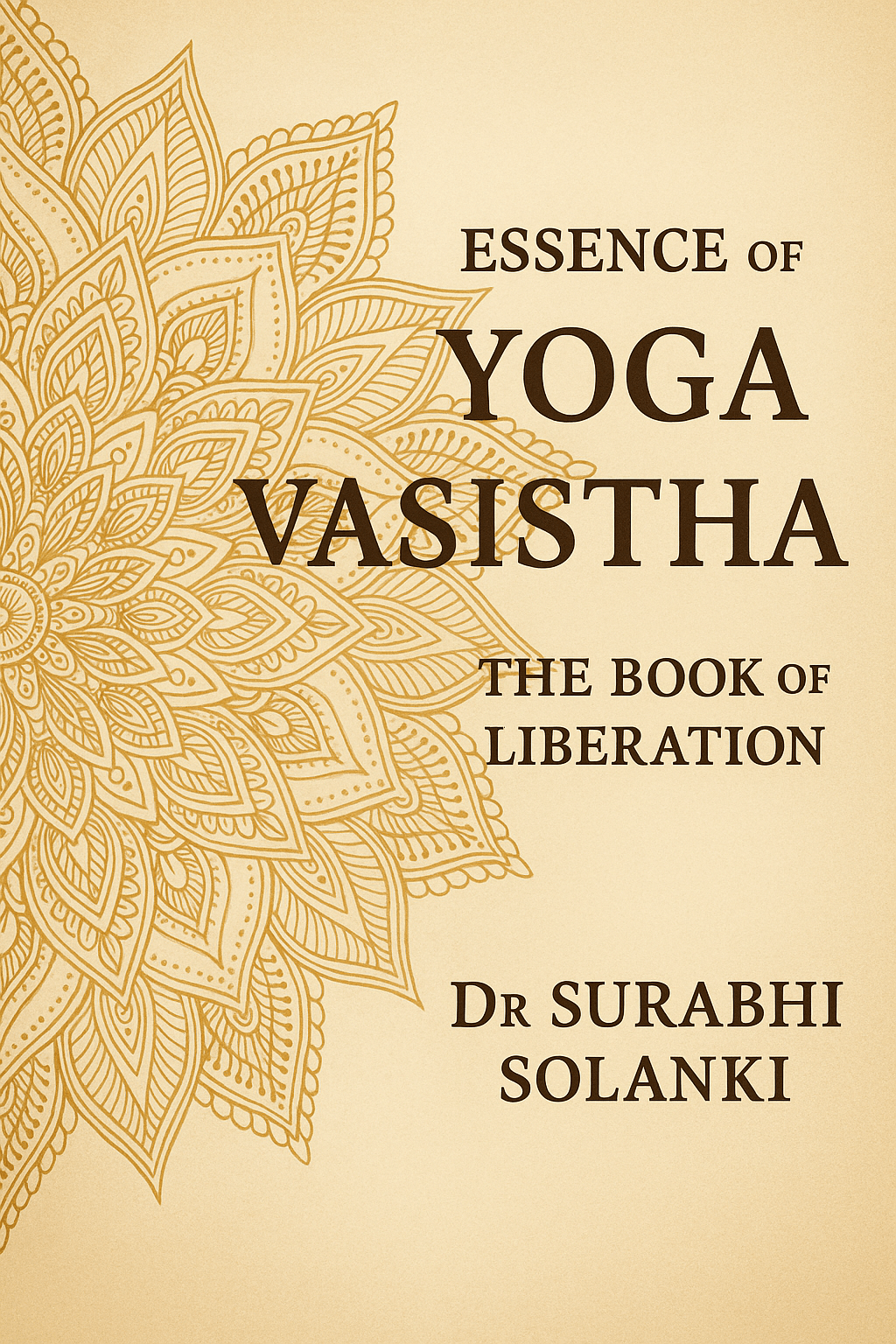
The Yoga Vashistha is one of the most profound spiritual texts of ancient India, offering a direct, practical, and uncompromising vision of non-dual wisdom (Advaita Vedanta). For modern readers seeking clarity beyond ritual, belief, or dogma, finding a Yoga Vashistha book in English has become essential.
This article explores:
- What the Yoga Vashistha is
- Why it is unique among spiritual scriptures
- What it teaches about mind, reality, and liberation
- How to choose the best English version
- Why it is increasingly relevant today
What Is the Yoga Vashistha?
The Yoga Vashistha is a classical philosophical text presented as a dialogue between Sage Vashistha and Prince Rama. Unlike most spiritual scriptures, it does not rely on religious commandments or external worship. Instead, it focuses entirely on self-inquiry, consciousness, and the nature of reality.
It belongs to the Jnana (knowledge) tradition of Indian philosophy and is closely aligned with Advaita Vedanta, the philosophy of non-duality.
Core Theme
Liberation is attained not by action, ritual, or belief—but by right understanding.
Why Is the Yoga Vashistha Considered Unique?
Unlike the Bhagavad Gita or the Upanishads, the Yoga Vashistha:
- Uses stories and metaphors to explain deep metaphysical truths
- Explores the mind as the root of bondage and freedom
- Rejects blind faith and encourages direct insight
- Explains illusion (Maya) in extraordinary psychological depth
It does not ask the seeker to escape the world, but to see the world correctly.
Key Teachings of Yoga Vashistha
1. The Mind Creates Reality
The text repeatedly states that the world experienced by an individual is a projection of the mind. When the mind is purified through understanding, suffering dissolves naturally.
2. Liberation Is Here and Now
Yoga Vashistha emphasizes Jivanmukti—freedom while living. Liberation is not an event after death but a shift in perception.
3. Renunciation Is Internal
True renunciation is not abandoning life, but abandoning false identification with thoughts, emotions, and ego.
4. No Conflict Between Life and Liberation
One can live fully in the world—work, relationships, responsibilities—while remaining inwardly free.
Why Read the Yoga Vashistha Book in English?
While the original text is in Sanskrit, most seekers today search for:
- Yoga Vashistha English translation
- Yoga Vashistha explained in simple English
- Yoga Vashistha modern interpretation
A well-written English version makes the text:
- Accessible to global readers
- Relevant to modern psychological and spiritual inquiry
- Free from excessive scholastic complexity
Challenges With Traditional English Translations
Many existing English translations:
- Are extremely literal and difficult to read
- Use outdated or archaic language
- Focus more on scholarship than clarity
- Lack contextual explanation
This often makes the Yoga Vashistha feel inaccessible, even though its wisdom is universal.
What Makes a Good Yoga Vashistha Book in English?
When choosing an English edition, look for:
✔ Clear, modern language
✔ Faithful to Advaita Vedanta principles
✔ Structured for contemporary readers
✔ Interpretive clarity rather than literal complexity
✔ Emphasis on inner transformation
Essence of Yoga Vashistha: The Book of Liberation (Modern English Retelling)
A modern approach to the Yoga Vashistha presents the teachings not as a rigid scripture, but as a living dialogue on consciousness.
Such a book:
- Retains the soul of the original text
- Removes unnecessary mythological heaviness
- Connects ancient wisdom with modern inner struggles
- Helps readers apply insights in daily life
This makes the Yoga Vashistha not just a book to read—but a guide to awakening.
Who Should Read the Yoga Vashistha?
This book is ideal for:
- Spiritual seekers beyond ritual and belief
- Readers of Advaita Vedanta
- Those interested in consciousness studies
- Individuals seeking freedom from mental suffering
- Readers of Upanishads, Ramana Maharshi, Nisargadatta Maharaj
If questions like “Who am I?”, “Why do I suffer?”, and “What is real?” resonate with you—the Yoga Vashistha speaks directly to your inquiry.
Yoga Vashistha vs Other Spiritual Texts
| Text | Focus |
|---|---|
| Bhagavad Gita | Action + Devotion + Knowledge |
| Upanishads | Ultimate metaphysical truth |
| Yoga Sutras | Mind discipline |
| Yoga Vashistha | Mind, illusion, liberation through understanding |
The Yoga Vashistha goes deeper into mental bondage and freedom than almost any other text.
Why Yoga Vashistha Is More Relevant Today Than Ever
In a world of:
- Anxiety
- Identity crisis
- Overthinking
- Constant mental noise
The Yoga Vashistha offers something radical:
Freedom does not come from changing life—but from understanding the mind.
Its teachings align seamlessly with modern psychology, mindfulness, and non-dual awareness.
Frequently Asked Questions
Is Yoga Vashistha difficult to read?
Traditional versions can be challenging, but modern English retellings make it accessible and deeply transformative.
Is Yoga Vashistha religious?
No. It is philosophical and experiential, not religious or sectarian.
Can beginners read Yoga Vashistha?
Yes—if the language is clear and explanatory.
Is Yoga Vashistha Advaita Vedanta?
Yes. It is one of the most complete expositions of Advaita Vedanta.
Final Thoughts
Searching for a Yoga Vashistha book in English is not merely about reading another spiritual text—it is about re-learning how to see reality.
The Yoga Vashistha does not promise comfort.
It offers clarity.
And clarity is the beginning of freedom.
About the Author
Dr. Surabhi Solanki is an author and interpreter of Advaita Vedanta and classical Indian philosophy. Her writings present ancient wisdom—such as the Yoga Vashistha, Upanishads, and Bhagavad Gita—in clear, modern language for contemporary seekers.

 Dr Surabhi Solanki