The Katha Upanishad is one of the most profound spiritual texts of ancient India, addressing humanity’s deepest question: What happens after death? For modern seekers searching for a Katha Upanishad book in English, this Upanishad offers timeless wisdom on immortality, the nature of the Self, and the path to ultimate freedom.
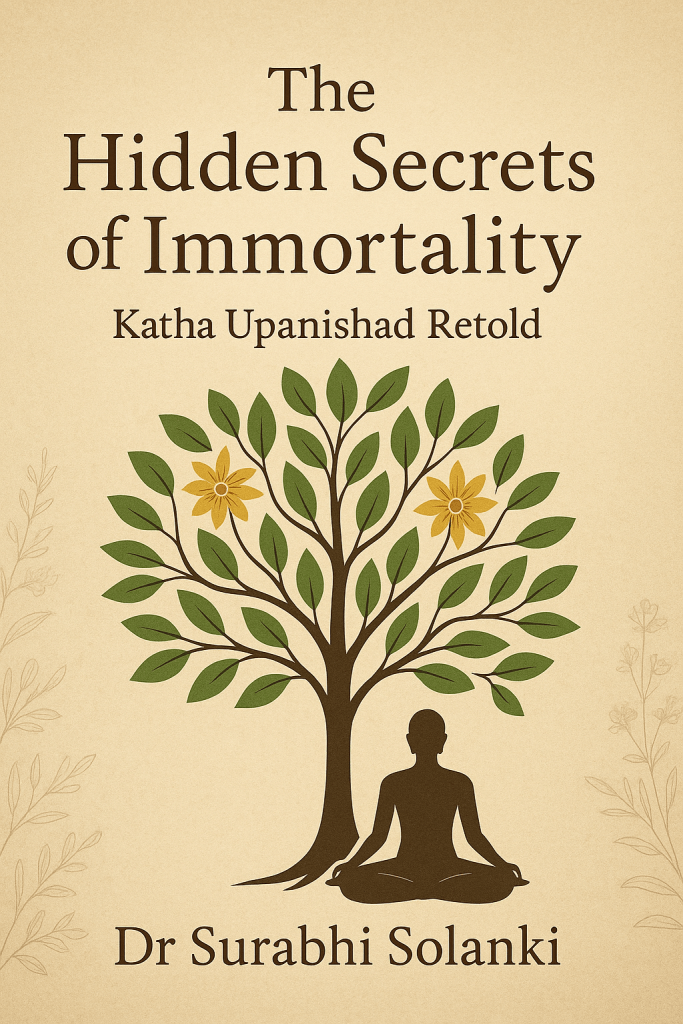
Rooted in Advaita Vedanta, the Katha Upanishad speaks not through ritual or belief, but through direct inquiry, clarity, and inner awakening.
What Is the Katha Upanishad?
The Katha Upanishad is a classical Sanskrit text belonging to the Krishna Yajurveda. It is presented as a powerful dialogue between Nachiketa, a sincere young seeker, and Yama, the Lord of Death.
Unlike most scriptures, the Katha Upanishad does not avoid death—it uses death as the doorway to truth.
Central Question
Is there something eternal beyond the body and mind?
Why the Katha Upanishad Is Unique Among Upanishads
The Katha Upanishad stands apart because it:
- Uses a story format to convey deep philosophy
- Directly addresses death, fear, and immortality
- Emphasizes self-knowledge over rituals
- Explains the difference between the Real and the pleasant
It is both philosophical and practical, making it deeply relevant even today.
Core Teachings of the Katha Upanishad
1. The Choice Between Shreyas and Preyas
The Upanishad introduces a timeless teaching:
- Preyas – the pleasant, temporary, sensory path
- Shreyas – the good, eternal, liberating path
Liberation comes from choosing truth over comfort.
2. The Immortal Self (Atman)
The body dies. The mind changes.
But the Self (Atman) is unborn, eternal, and indestructible.
“The Self is not born, nor does it die.”
This teaching forms the foundation of non-dual wisdom.
3. Mastery of the Mind and Senses
The famous chariot metaphor explains human experience:
- Body = chariot
- Senses = horses
- Mind = reins
- Intellect = driver
- Self = the master
Without self-knowledge, life moves toward suffering.
4. Liberation Through Knowledge, Not Action
The Katha Upanishad clearly states:
- Rituals cannot grant immortality
- Actions alone do not liberate
- Only knowledge of the Self leads to freedom
Why Read the Katha Upanishad Book in English?
Most seekers today look for:
- Katha Upanishad English translation
- Katha Upanishad explained in simple English
- Katha Upanishad modern interpretation
An English version makes this profound wisdom:
- Accessible to global readers
- Relevant to modern psychological struggles
- Clear without losing philosophical depth
Problems With Traditional English Translations
Many older translations:
- Use archaic or academic language
- Assume prior Sanskrit knowledge
- Focus on literal translation, not understanding
As a result, readers often miss the living essence of the text.
What Makes a Good Katha Upanishad Book in English?
A meaningful English edition should:
✔ Use clear, modern language
✔ Preserve Advaita Vedanta teachings
✔ Explain symbolism and metaphors
✔ Focus on inner transformation
✔ Be readable for beginners and seekers
The Katha Upanishad as a Book of Immortality
At its heart, the Katha Upanishad is a manual for transcending fear of death. It does not promise heaven—it reveals fearlessness through self-knowledge.
This is why it continues to inspire:
- Spiritual seekers
- Philosophers
- Psychologists
- Non-dual teachers
Who Should Read the Katha Upanishad?
This book is ideal for:
- Seekers questioning life and death
- Readers of Advaita Vedanta
- Those drawn to self-inquiry
- Readers of the Upanishads and Bhagavad Gita
- Anyone seeking inner freedom and clarity
Katha Upanishad vs Other Spiritual Texts
| Text | Primary Focus |
|---|---|
| Bhagavad Gita | Life, action, devotion |
| Yoga Sutras | Mind discipline |
| Mandukya Upanishad | Consciousness states |
| Katha Upanishad | Immortality and the Self |
The Katha Upanishad uniquely addresses existential fear at its root.
Why the Katha Upanishad Is Especially Relevant Today
In an age of:
- Anxiety
- Fear of uncertainty
- Identity confusion
- Fear of death
The Katha Upanishad offers a radical truth:
Freedom comes not from controlling life, but from knowing who you truly are.
Frequently Asked Questions
Is the Katha Upanishad difficult to read?
Traditional versions can be challenging, but modern English interpretations make it accessible and deeply transformative.
Is the Katha Upanishad religious?
No. It is philosophical and experiential, not dogmatic or sectarian.
Is the Katha Upanishad part of Advaita Vedanta?
Yes. Its teachings are fully aligned with non-dual philosophy.
Final Thoughts
Searching for a Katha Upanishad book in English is not merely an academic pursuit—it is a journey toward fearlessness and truth.
The Katha Upanishad does not comfort the ego.
It awakens the Self.
And that awakening is freedom.

 Dr Surabhi Solanki