Adi Shankaracharya stands as one of the greatest philosophers in human history. His teachings shaped Advaita Vedanta, the non-dual philosophy that reveals the unity of Self and Brahman. For readers searching for Adi Shankaracharya books in English, his works offer profound clarity on consciousness, liberation, and the nature of reality.
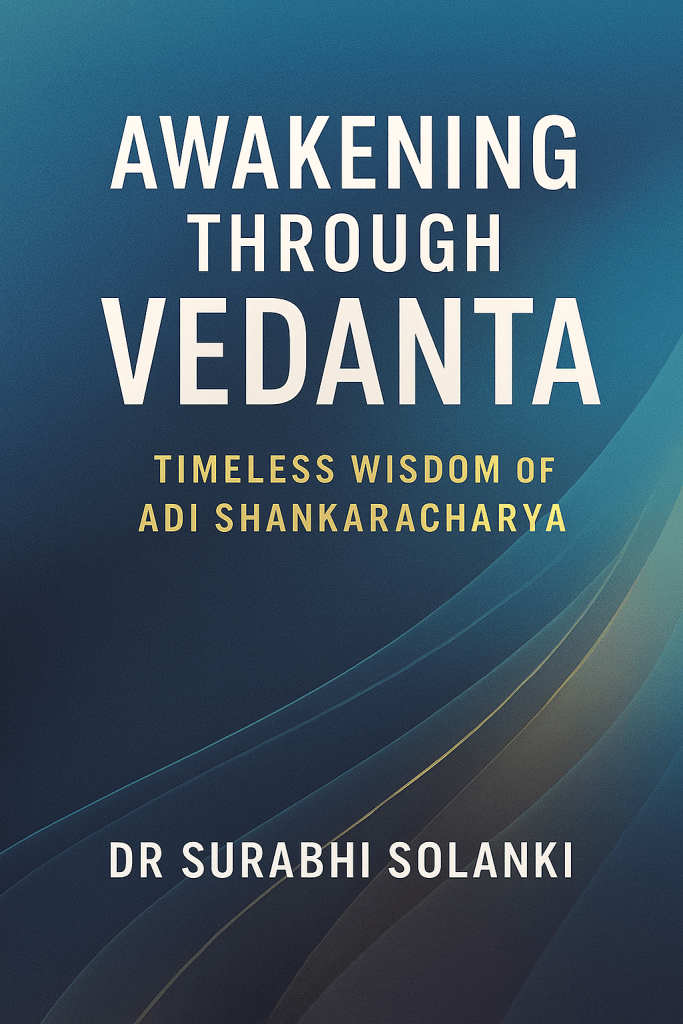
Even after more than a thousand years, Shankaracharya’s insights remain strikingly relevant to modern seekers of truth.
Who Was Adi Shankaracharya?
Adi Shankaracharya (8th century CE) was a philosopher, teacher, and spiritual reformer who revitalized Vedantic thought across India. Through his writings and commentaries, he established non-duality (Advaita) as one of the most influential schools of Indian philosophy.
His central teaching is simple yet radical:
Brahman alone is real. The world is appearance. The Self is Brahman.
Why Read Adi Shankaracharya Books in English?
Most of Shankaracharya’s original works were written in Sanskrit. Modern readers therefore search for:
- Adi Shankaracharya books in English
- Adi Shankaracharya commentaries explained
- Advaita Vedanta books in English
- Shankaracharya philosophy for beginners
English translations and modern interpretations make his wisdom accessible to seekers worldwide—without requiring Sanskrit scholarship.
Core Teachings of Adi Shankaracharya
1. Advaita (Non-Duality)
There is only one reality—Brahman. The apparent division between self and world arises from ignorance (avidya).
2. Liberation Through Knowledge
Freedom (moksha) is attained not by ritual or action, but by direct knowledge of the Self.
3. The Illusory Nature of the World
The world is not denied, but understood as appearance, like a dream experienced during sleep.
4. The Identity of Atman and Brahman
The individual self (Atman) is not separate from the absolute reality (Brahman).
Important Adi Shankaracharya Books in English
Vivekachudamani (Crest-Jewel of Discrimination)
One of Shankaracharya’s most accessible works, focusing on:
- Discrimination between the real and unreal
- Detachment
- Self-knowledge
It is often the starting point for Advaita Vedanta readers.
Upanishad Commentaries (Bhashyas)
Shankaracharya wrote authoritative commentaries on major Upanishads, including:
- Katha Upanishad
- Kena Upanishad
- Mandukya Upanishad
- Brihadaranyaka Upanishad
These works form the philosophical foundation of Advaita Vedanta.
Bhagavad Gita Bhashya
Adi Shankaracharya’s commentary on the Bhagavad Gita reveals:
- Knowledge (Jnana) as the direct means to liberation
- Karma and devotion as preparatory disciplines
It is considered one of the most important Gita interpretations ever written.
Brahma Sutra Bhashya
This is Shankaracharya’s most rigorous philosophical work, systematically establishing Advaita Vedanta.
It addresses:
- The nature of Brahman
- Liberation
- The consistency of non-dual philosophy
Prakarana Granthas (Introductory Texts)
Short but powerful works such as:
- Atma Bodha
- Aparokshanubhuti
- Upadesa Sahasri
These texts explain Advaita Vedanta in a direct and practical manner.
Challenges With Traditional English Translations
Many existing translations:
- Use academic or archaic English
- Assume prior philosophical background
- Focus on literal accuracy rather than clarity
As a result, readers often struggle to internalize Shankaracharya’s insights.
What Makes a Good Adi Shankaracharya Book in English?
A high-quality English edition should:
✔ Use clear, modern language
✔ Preserve Advaita Vedanta principles
✔ Explain context and symbolism
✔ Avoid unnecessary scholastic complexity
✔ Focus on self-inquiry and understanding
Modern retellings and explanations help bridge ancient wisdom with contemporary life.
Why Adi Shankaracharya Is Relevant Today
In a world marked by:
- Anxiety and identity confusion
- Over-intellectualization
- Constant mental noise
Shankaracharya’s teachings offer clarity through simplicity:
Suffering ends when ignorance ends.
His message aligns deeply with modern inquiry into consciousness and awareness.
Who Should Read Adi Shankaracharya Books?
These books are ideal for:
- Students of Advaita Vedanta
- Readers of Upanishads and Bhagavad Gita
- Spiritual seekers beyond ritual
- Those interested in consciousness studies
- Anyone seeking inner freedom
Adi Shankaracharya vs Other Philosophical Thinkers
| Thinker | Primary Focus |
|---|---|
| Buddha | Impermanence and suffering |
| Patanjali | Mind discipline |
| Ramanuja | Qualified non-dualism |
| Adi Shankaracharya | Pure non-duality (Advaita) |
Shankaracharya presents one of the clearest non-dual frameworks ever articulated.
Frequently Asked Questions
Are Adi Shankaracharya books difficult to read?
Traditional translations can be challenging, but modern English interpretations make them accessible.
Is Advaita Vedanta religious?
No. It is philosophical and experiential, centered on self-knowledge.
Which Adi Shankaracharya book should I start with?
Vivekachudamani or Atma Bodha are excellent starting points.
Final Thoughts
Searching for Adi Shankaracharya books in English is not about reading philosophy—it is about awakening to truth.
Shankaracharya does not offer beliefs.
He offers clarity.
And clarity is liberation.

 Dr Surabhi Solanki