Non-duality is one of the most profound insights ever explored by human thought. At its heart, non-duality reveals a simple yet transformative truth: there is only one reality, and the sense of separation we experience is born of misunderstanding.
For seekers drawn to this wisdom, books on non-duality serve as powerful guides—pointing beyond belief, ritual, and identity toward direct self-knowledge. Rooted primarily in Advaita Vedanta, non-dual teachings have shaped Indian philosophy for centuries and continue to influence modern spiritual inquiry worldwide.
What Is Non-Duality?
Non-duality means “not two.”
It points to the truth that the individual self and ultimate reality are not separate.
In Advaita Vedanta, this reality is called Brahman, and the individual self is Atman. The core teaching is:
Atman is Brahman.
Suffering arises not because reality is broken, but because reality is misunderstood.
Why Read Books on Non-Duality?
Books on non-duality are not meant to provide comfort or belief. Their purpose is clarity.
Readers turn to non-dual literature to:
- Understand the nature of consciousness
- Resolve inner conflict and fear
- Transcend ego-based identity
- Discover freedom beyond circumstances
Unlike motivational or devotional books, non-dual texts aim to remove ignorance, not add ideas.
Classical Books on Non-Duality
Upanishads
The foundational texts of Advaita Vedanta, especially:
- Mandukya Upanishad
- Katha Upanishad
- Kena Upanishad
They introduce the core inquiry into the Self and reality.
Bhagavad Gita (Non-Dual Interpretations)
While widely known as a devotional text, the Bhagavad Gita—especially through Adi Shankaracharya’s commentary—reveals a strong non-dual foundation centered on self-knowledge.
Yoga Vashistha
One of the most comprehensive explorations of non-duality, the Yoga Vashistha examines:
- The nature of mind
- Illusion (maya)
- Liberation while living
It presents Advaita not as theory, but as lived understanding.
Modern Books on Non-Duality
Modern seekers often look for:
- Books on non-duality in simple English
- Practical Advaita Vedanta
- Non-dual teachings for daily life
While classical texts are profound, they can be difficult to approach without guidance. This has led to a growing need for clear, modern interpretations that preserve depth without unnecessary complexity.
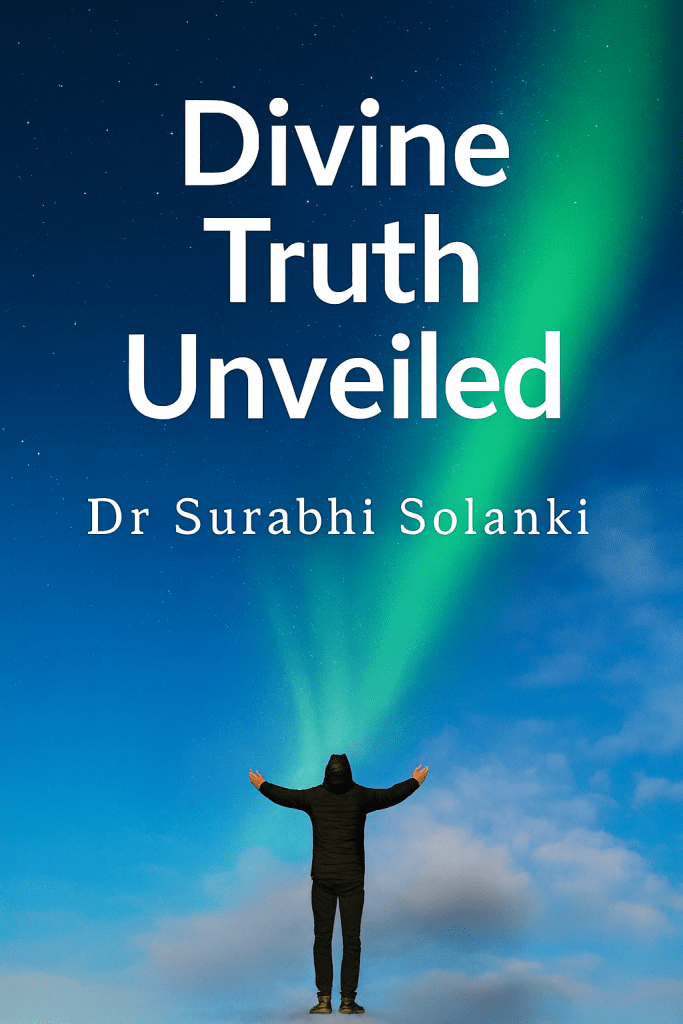
Divine Truth Unveiled: Non-Duality Through the Mandukya Karika
Among contemporary books on non-duality, Divine Truth Unveiled: Hidden Secrets of Gaudapada’s Mandukya Karika offers a distinctive contribution.
Rooted in one of the most authoritative non-dual texts—the Mandukya Karika—this book explores non-duality not as philosophy, but as direct insight into consciousness itself.
What Makes This Book Different?
- Focuses on pure Advaita Vedanta, uncompromised by ritual or belief
- Presents Gaudapada’s radical non-duality in clear, modern language
- Guides the reader toward seeing, not believing
- Emphasizes awareness beyond waking, dream, and deep sleep
Rather than offering interpretations layered with theology, Divine Truth Unveiled brings the reader face-to-face with the non-dual truth of the Self.
Non-Duality Is Not a Concept — It Is a Recognition
The greatest books on non-duality share one quality:
They do not try to improve the person.
They reveal that the person itself is a misunderstanding.
True non-dual wisdom:
- Does not promise happiness
- Does not offer techniques
- Does not create spiritual identity
It dissolves ignorance through understanding.
Who Should Read Books on Non-Duality?
Books on non-duality are ideal for:
- Serious spiritual seekers
- Readers of Advaita Vedanta
- Those dissatisfied with belief-based spirituality
- Individuals seeking freedom from mental suffering
- Readers drawn to consciousness studies
If questions like “Who am I?”, “What is real?”, and “What never changes?” resonate with you, non-dual literature speaks directly to your inquiry.
Why Non-Duality Matters Today
In a world dominated by:
- Anxiety and identity confusion
- Constant mental stimulation
- External validation
Non-duality offers something rare:
Freedom through understanding, not escape.
It reveals that peace is not found by changing experience—but by understanding the experiencer.
Final Thoughts
Books on non-duality are not meant to decorate a bookshelf.
They are meant to undo misunderstanding.
Among both classical and modern works, texts grounded in authentic Advaita Vedanta—such as the Mandukya Karika and its clear interpretations—stand as timeless guides for those ready to look beyond appearances.
Non-duality does not give you something new.
It reveals what has always been present.

 Dr Surabhi Solanki