If you are searching “Is liberation possible while living a normal life?”, you are asking a question that lies at the heart of Advaita Vedanta. The short answer is yes—and not only possible, but intended.
Advaita Vedanta does not require renunciation of family, work, or society. It teaches freedom through understanding, not escape from life.
This article explains how liberation is possible while living normally, why renunciation is often misunderstood, and how classical texts support this truth.
What Does “Liberation” Actually Mean?
In Advaita Vedanta, liberation (moksha) does not mean:
- Leaving the world
- Becoming inactive or withdrawn
- Achieving a mystical state
Liberation means:
Freedom from ignorance about one’s true nature.
It is a shift in understanding, not a change in lifestyle.
The Core Insight: Bondage Is Mental, Not Situational
Advaita Vedanta states clearly:
Bondage is caused by identification with the body and mind—not by worldly life.
Therefore:
- Changing external circumstances does not free you
- Changing understanding does
A person can live in a forest and remain bound.
Another can live in a city and be free.
What Is a “Normal Life” in Advaita Vedanta?
A normal life includes:
- Family responsibilities
- Work and profession
- Relationships and emotions
- Pleasure and pain
- Success and failure
Advaita Vedanta does not reject these.
It only rejects mistaking them for your identity.
Jivanmukti: Liberation While Living
Advaita Vedanta introduces the concept of jivanmukti—liberation while living.
A jivanmukta:
- Performs duties naturally
- Acts in the world without inner conflict
- Experiences emotions without being owned by them
- Lives without fear of loss
Life continues.
Suffering does not.
Scriptural Support: Liberation Without Renunciation
1. The Upanishads
The Upanishads repeatedly declare that:
- Knowledge liberates
- Liberation is immediate upon understanding
- No external condition is required
Renunciation is mental, not physical.
2. Bhagavad Gita
The Bhagavad Gita directly answers this question.
Krishna does not ask Arjuna to leave the battlefield.
He asks him to see rightly while acting.
This makes the Gita a manual for liberation in active life.
3. Yoga Vasistha
The Yoga Vasistha states clearly:
One who understands the truth is liberated, whether living in a palace or a forest.
Yoga Vasistha dismantles the idea that renunciation produces freedom.
Why Renunciation Is Often Misunderstood
Renunciation is often taken to mean:
- Giving up possessions
- Leaving society
- Withdrawing from responsibilities
But Advaita Vedanta defines renunciation as:
Dropping false identification.
You can renounce ignorance without renouncing life.
What Changes After Liberation?
Liberation does not make life extraordinary.
It makes you free within life.
After liberation:
- Fear reduces
- Anxiety loses its grip
- Attachment softens
- Reactions decrease
- Peace becomes natural
Life appears the same externally—
but it is lived without psychological burden.
Why This Teaching Is Crucial Today
Modern seekers often feel:
- Spiritually torn between life and freedom
- Guilty for wanting peace while living actively
- Confused by renunciation-based teachings
Advaita Vedanta resolves this conflict completely:
Freedom is compatible with responsibility.
Understanding This Clearly (Without Confusion)
Classical texts can feel dense and intimidating. To make this wisdom accessible, Dr. Surabhi Solanki has authored modern, faithful books that explain liberation without demanding withdrawal from life.
Recommended Reading
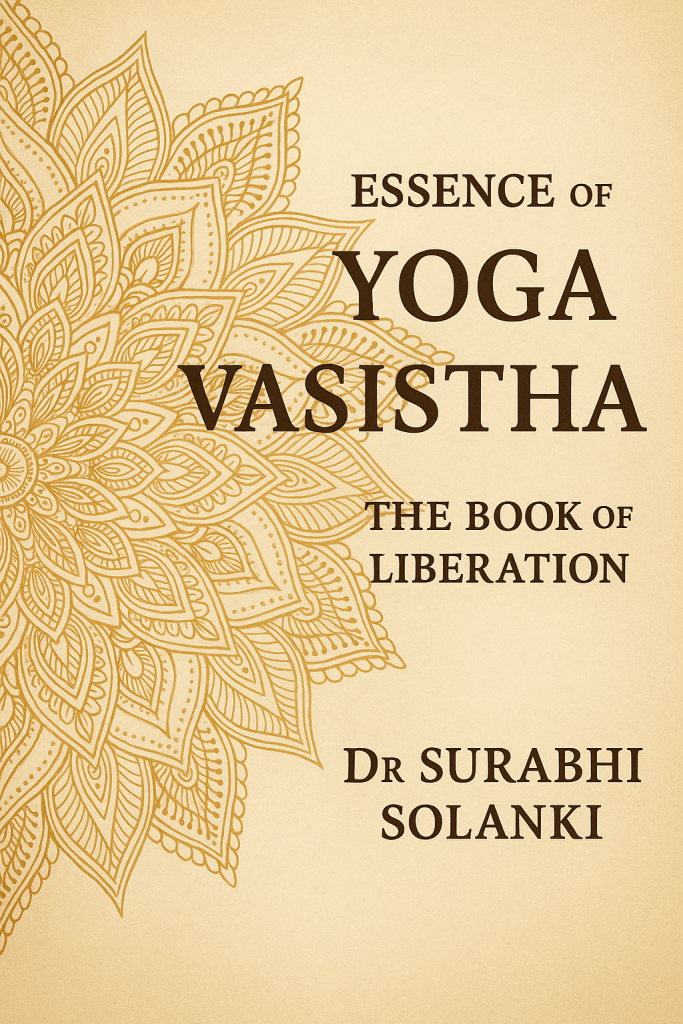
- Essence of Yoga Vasistha: The Book of Liberation
Explains liberation as freedom from mental bondage while living normally. - Bhagavad Gita: Insights from Adi Shankaracharya
Shows how right understanding transforms action into freedom. - Awakening Through Vedanta: Timeless Wisdom of Adi Shankaracharya
Builds a clear foundation for liberation through knowledge.
Final Answer: Is Liberation Possible While Living a Normal Life?
✔ Yes—liberation is possible
✔ Life does not need to change
✔ Understanding does
✔ Renunciation is mental, not physical
✔ Freedom is here and now
Advaita Vedanta does not ask you to leave life.
It asks you to see life rightly.
A Closing Insight
You don’t need a different life to be free.
You need a different understanding of yourself.
If this teaching resonates with you, the books by Dr. Surabhi Solanki offer a clear, authentic path to liberation—without abandoning your normal life.

 Dr Surabhi Solanki