If you are searching “what is the difference between Vedas and Vedanta”, you are asking a foundational question in Indian philosophy. Although the two words are closely related, Vedas and Vedanta are not the same in purpose, method, or spiritual goal.
Understanding this difference is essential if you want clarity instead of confusion while studying Hindu philosophy, the Upanishads, or Advaita Vedanta.
This article explains the difference clearly, simply, and accurately, without religious jargon.
The Short Answer (Clear and Direct)
- Vedas focus on rituals, duties, prayers, and righteous living
- Vedanta focuses on knowledge, self-inquiry, and liberation
In simple terms:
The Vedas teach how to live well in the world.
Vedanta teaches how to be free from the sense of bondage itself.
What Are the Vedas?
The Vedas are the oldest sacred texts of Indian tradition and are considered Śruti (revealed knowledge).
There are four Vedas:
- Rig Veda
- Yajur Veda
- Sama Veda
- Atharva Veda
What the Vedas Teach
The Vedas primarily deal with:
- Rituals (yajña)
- Prayers and hymns
- Ethical duties (dharma)
- Cosmic order (ṛta)
- Material and heavenly prosperity
Their purpose is to guide life within the world.
Structure of the Vedas
Each Veda has four parts:
- Samhitas – hymns and chants
- Brahmanas – ritual explanations
- Aranyakas – contemplative reflections
- Upanishads – philosophical inquiry
The Upanishads form the final portion of the Vedas.
What Is Vedanta?
Vedanta literally means:
- Veda → knowledge
- Anta → end or culmination
So Vedanta means:
The culmination of Vedic wisdom.
Vedanta is not a separate scripture—it is the philosophical conclusion of the Vedas, primarily expressed through the Upanishads.
What Vedanta Teaches
Vedanta shifts the focus from outer action to inner understanding.
It asks:
- Who am I?
- What is reality?
- Why do I suffer?
- What is liberation (moksha)?
Vedanta declares:
Atman (the Self) is Brahman (ultimate reality).
This insight forms the foundation of Advaita Vedanta.
Key Differences Between Vedas and Vedanta
1. Difference in Focus
| Aspect | Vedas | Vedanta |
|---|---|---|
| Main concern | Ritual & duty | Knowledge & liberation |
| Orientation | External action | Inner inquiry |
| Goal | Harmony & prosperity | Freedom (moksha) |
2. Karma vs Knowledge
- Vedas emphasize karma (action and ritual)
- Vedanta emphasizes jnana (knowledge and understanding)
Vedanta clearly states:
Liberation cannot be achieved by action—only by knowledge.
3. Worldly Life vs Ultimate Truth
- Vedas guide how to live properly in the world
- Vedanta reveals the truth beyond the world
Both are important—but they serve different stages of understanding.
4. God and Reality
- Vedas often speak of multiple deities as cosmic forces
- Vedanta reveals one non-dual reality (Brahman) behind all forms
This is why Vedanta is philosophical, not ritualistic.
Are Vedas and Vedanta Opposed?
No.
They are complementary, not contradictory.
- The Vedas prepare the mind
- Vedanta liberates the mind
Without Vedanta, the Vedas remain incomplete.
Why Vedanta Is More Relevant to Modern Seekers
Modern seekers often want:
- Clarity, not ritual complexity
- Understanding, not obligation
- Freedom, not fear-based belief
Vedanta directly addresses the root cause of suffering—ignorance of one’s true nature.
That is why Vedanta remains timeless.
Vedanta Explained Clearly for Today’s Readers
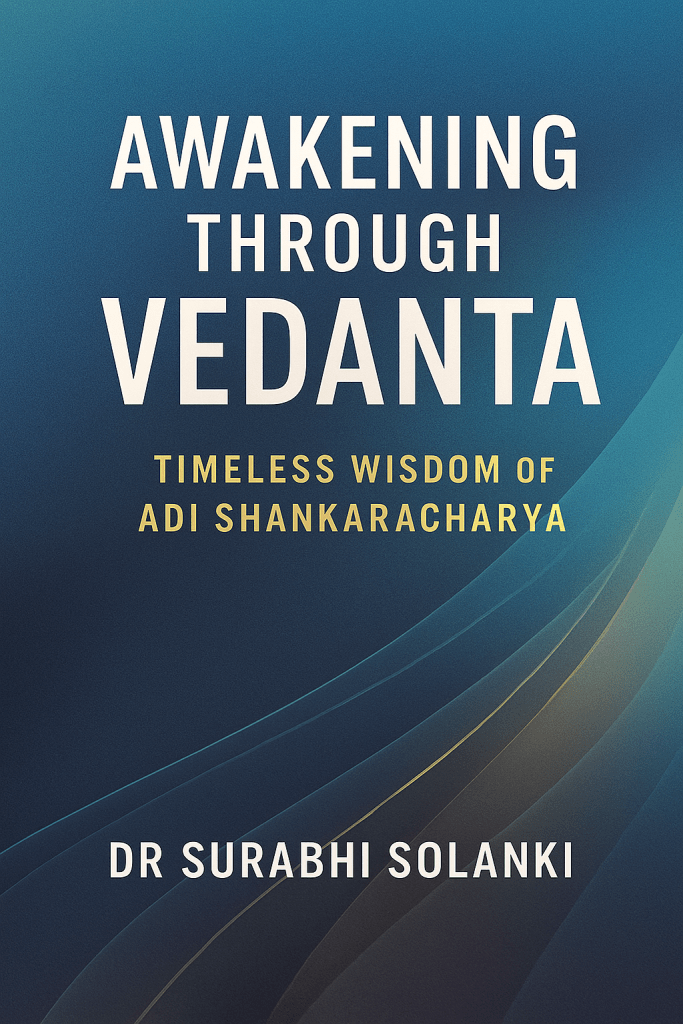
Classical Vedanta texts can feel dense and intimidating. To make this wisdom accessible without dilution, Dr. Surabhi Solanki has authored modern, faithful books rooted in authentic Advaita Vedanta.
Recommended Books
- Awakening Through Vedanta: Timeless Wisdom of Adi Shankaracharya
A clear introduction to Vedantic philosophy. - Divine Truth Unveiled: Hidden Secrets of Gaudapada’s Mandukya Karika
A deep yet accessible exposition of pure Advaita Vedanta. - Essence of Yoga Vasistha: The Book of Liberation
Explains liberation through understanding the mind. - Bhagavad Gita: Insights from Adi Shankaracharya
Bridges action and knowledge beautifully.
These books are ideal for readers who want Vedanta simplified, not diluted.
Vedas vs Vedanta in One Line
The Vedas teach how to act rightly.
Vedanta teaches how to be free.
Final Summary: Difference Between Vedas and Vedanta
✔ Vedas focus on ritual, duty, and order
✔ Vedanta focuses on knowledge and liberation
✔ Vedas guide worldly life
✔ Vedanta reveals ultimate truth
✔ Vedanta is the culmination of the Vedas
To understand Indian philosophy fully, both matter—
but for liberation, Vedanta is decisive.
Closing Insight
Ritual may discipline life.
Knowledge frees it.
If you wish to explore Vedanta with clarity and depth, the books by Dr. Surabhi Solanki offer a modern, authentic path into the heart of this timeless wisdom.

 Dr Surabhi Solanki