Kena Upanishad in English: Understanding the Power Beyond Perception

The Kena Upanishad is one of the most subtle and penetrating texts of Indian philosophy. Instead of describing God, rituals, or cosmology, it asks a radical question:

By whom is the mind directed?
By whose power do the senses function?
For modern seekers searching for the Kena Upanishad in English, this text offers a direct inquiry into consciousness, perception, and the source of all experience. Its teachings are timeless, yet strikingly relevant in an age dominated by sensory overload and intellectual certainty.


What Is the Kena Upanishad?

The Kena Upanishad belongs to the Sama Veda and is one of the principal Upanishads. Its name comes from the opening word “Kena”, meaning “by whom”—a question that sets the tone for the entire text.

Rather than giving answers in the usual sense, the Kena Upanishad points the reader beyond thought, beyond perception, and beyond the known.


The Central Teaching of the Kena Upanishad

The Upanishad reveals a profound truth:

That which enables the mind to think cannot itself be an object of thought.
That which enables the eye to see cannot itself be seen.

This teaching shifts the seeker’s attention from objects of experience to the source of experience itself.

In Advaita Vedanta, this source is recognized as Brahman—not an entity, but pure awareness.


Why Read the Kena Upanishad in English?

Most modern readers look for:

  • Kena Upanishad in English
  • Kena Upanishad explained in simple language
  • Kena Upanishad meaning and commentary
  • Advaita Vedanta books in English

An English interpretation allows seekers to engage deeply with the text without needing Sanskrit scholarship, while still preserving its philosophical depth.


Challenges With Traditional English Translations

Many older translations:

  • Use highly academic or archaic language
  • Focus on literal meaning rather than insight
  • Do not bridge the gap between text and lived experience

As a result, readers may understand the words—but miss the revelation the Upanishad is pointing toward.


The Kena Upanishad and Advaita Vedanta

The Kena Upanishad is firmly rooted in non-dual (Advaita) wisdom. It makes it clear that:

  • Brahman is not an object
  • Knowledge of Brahman is not intellectual
  • True understanding is recognition, not acquisition

Ignorance is not lack of information, but misplaced identification with the mind and senses.


Power Beyond Perception: A Modern Reading of the Kena Upanishad

To truly understand the Kena Upanishad, one must move beyond interpretation and arrive at direct insight. This is where modern, clarity-focused explanations become essential.

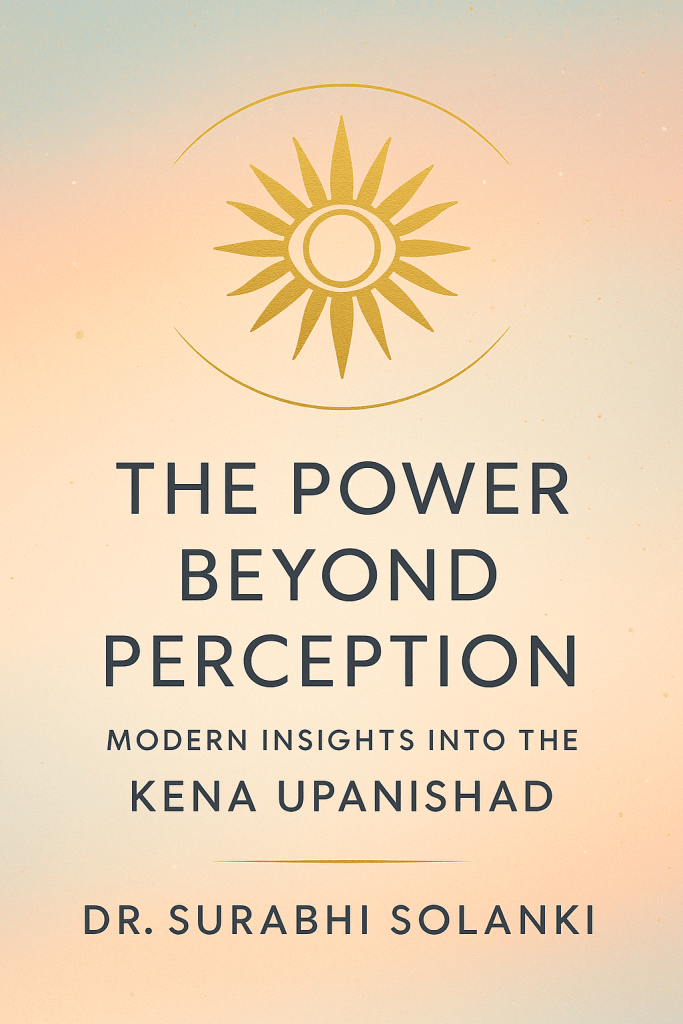
Power Beyond Perception: Modern Insights into the Kena Upanishad approaches the text not as philosophy to be memorized, but as a mirror for self-inquiry.

What This Book Brings to the Reader

  • Clear, modern English without dilution of depth
  • Focus on awareness behind perception, not metaphysics
  • Connection between ancient insight and modern consciousness
  • Guidance toward seeing rather than believing

Instead of explaining about Brahman, the book consistently points the reader toward what is already present as awareness.


The Devas and the Yaksha: Symbolism Explained

One of the most striking sections of the Kena Upanishad is the story of the Devas and the mysterious Yaksha.

Symbolically:

  • The Devas represent the powers of the senses and intellect
  • The Yaksha represents Brahman, the unknown source

The story reveals that ego and intellect cannot grasp the ultimate truth, even though they depend on it completely.

This teaching is especially relevant in a world that overvalues knowledge but overlooks awareness.


Who Should Read the Kena Upanishad?

The Kena Upanishad is ideal for:

  • Seekers interested in consciousness studies
  • Readers of Advaita Vedanta
  • Those dissatisfied with purely devotional or ritualistic texts
  • Individuals exploring the limits of perception and knowledge
  • Readers of the Upanishads, Mandukya Karika, and non-dual philosophy

Why the Kena Upanishad Is More Relevant Today Than Ever

In a time of:

  • Information overload
  • Sensory distraction
  • Intellectual certainty

The Kena Upanishad quietly asks:

What is it that knows all this?

This single question has the power to dissolve confusion at its root.


Final Thoughts

Reading the Kena Upanishad in English is not about accumulating spiritual knowledge. It is about turning attention back to its source.

Books that approach this Upanishad with clarity and experiential depth—rather than commentary alone—serve as powerful companions on the path of self-knowledge.

The Kena Upanishad does not give answers.
It removes the false questioner.

And in that silence, truth stands revealed.
Brahma Sutra Book in English: A Complete Guide to Vedantic Wisdom and Self-Knowledge

The Brahma Sutra is one of the most authoritative texts of Indian philosophy. Along with the Upanishads and the Bhagavad Gita, it forms the foundation of Vedanta, addressing the deepest questions about reality, consciousness, and liberation. For readers seeking a Brahma Sutra book in English, this text offers a systematic and uncompromising inquiry into the nature of Brahman, the ultimate truth.

Rooted in Advaita Vedanta, the Brahma Sutra does not provide beliefs—it provides clarity through reasoned understanding.


What Is the Brahma Sutra?

The Brahma Sutra, traditionally attributed to Badarayana, is a collection of concise aphorisms (sutras) that systematize the teachings of the Upanishads. The text consists of 555 sutras, arranged into four chapters, each addressing a central aspect of Vedantic inquiry.

The Brahma Sutra answers one fundamental question:

What is the ultimate reality, and how is it known?


Why the Brahma Sutra Is Central to Vedanta

Unlike poetic or narrative scriptures, the Brahma Sutra is:

  • Analytical and logical
  • Philosophically rigorous
  • Focused on direct knowledge of Brahman
  • Free from ritual or mythology

It clarifies apparent contradictions in the Upanishads and establishes a coherent vision of non-dual truth.


Adi Shankaracharya and the Brahma Sutra

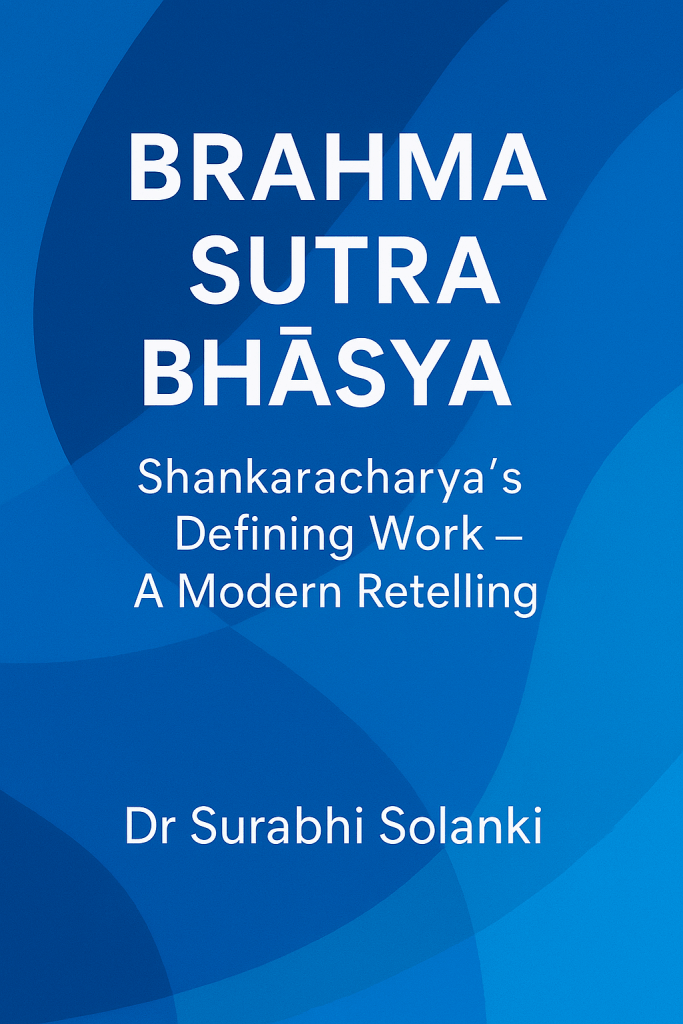
The Brahma Sutra becomes fully illuminated through the Brahma Sutra Bhāṣya of Adi Shankaracharya. His commentary establishes Advaita Vedanta as a complete philosophical system.

According to Shankaracharya:

  • Brahman alone is real
  • The world is appearance (mithya)
  • The individual self is not separate from Brahman

Any serious Brahma Sutra book in English is incomplete without grounding in Shankaracharya’s interpretation.


Core Teachings of the Brahma Sutra

1. Brahman Is the Ultimate Reality

The Brahma Sutra establishes Brahman as:

  • Eternal
  • Unchanging
  • Non-dual
  • The substratum of all experience

2. Liberation Comes Through Knowledge

Freedom (moksha) is attained not by action, ritual, or belief, but by direct knowledge of Brahman.


3. Ignorance Is the Cause of Bondage

Suffering arises from ignorance (avidya), not from the world itself. When ignorance ends, freedom is revealed.


4. Scripture as a Means to Knowledge

The Brahma Sutra clarifies how the Upanishads function—not as commandments, but as pointers to truth.


Why Read a Brahma Sutra Book in English?

Modern readers often search for:

  • Brahma Sutra English translation
  • Brahma Sutra explained in simple English
  • Brahma Sutra with commentary
  • Vedanta philosophy books in English

An English edition makes this profound text accessible to seekers who do not read Sanskrit, while preserving its philosophical depth.


Challenges With Traditional English Translations

Many older translations:

  • Are extremely technical
  • Use academic or archaic language
  • Assume prior Vedantic training
  • Focus on literal accuracy rather than clarity

This can make the Brahma Sutra seem inaccessible, even though its purpose is direct understanding.


What Makes a Good Brahma Sutra Book in English?

A meaningful English edition should:

✔ Be grounded in Adi Shankaracharya’s Advaita
✔ Explain sutras contextually
✔ Use clear, modern language
✔ Avoid unnecessary scholastic complexity
✔ Emphasize self-knowledge over debate

A modern retelling or explanation helps readers grasp the essence without distortion.


The Brahma Sutra as a Guide to Self-Realization

The Brahma Sutra is not meant to be read casually. It is a text of inquiry, guiding the reader step by step toward the recognition that:

The seeker, the seeking, and the sought are not separate.

When properly understood, the Brahma Sutra dissolves philosophical confusion and reveals non-dual awareness.


Who Should Read the Brahma Sutra?

This book is ideal for:

  • Serious students of Advaita Vedanta
  • Readers of the Upanishads and Bhagavad Gita
  • Seekers interested in consciousness studies
  • Those ready for deep philosophical inquiry
  • Readers seeking clarity beyond belief

Brahma Sutra Compared to Other Vedantic Texts

TextPrimary Focus
UpanishadsRevealed truth
Bhagavad GitaApplied wisdom
Mandukya KarikaConsciousness
Brahma SutraSystematic Vedanta philosophy

The Brahma Sutra provides the logical backbone of Vedantic thought.


Why the Brahma Sutra Is Relevant Today

In an age of:

  • Conflicting spiritual claims
  • Information overload
  • Philosophical confusion

The Brahma Sutra offers something rare:

Clarity through disciplined inquiry.

It teaches that truth is not created—it is recognized.


Final Thoughts

Searching for a Brahma Sutra book in English is a sign of serious inquiry. This text does not offer comfort or belief. It offers understanding.

And understanding is liberation.

Books on Non-Duality: A Guide to Advaita Vedanta and the Path of Self-Realization

Non-duality is one of the most profound insights ever explored by human thought. At its heart, non-duality reveals a simple yet transformative truth: there is only one reality, and the sense of separation we experience is born of misunderstanding.

For seekers drawn to this wisdom, books on non-duality serve as powerful guides—pointing beyond belief, ritual, and identity toward direct self-knowledge. Rooted primarily in Advaita Vedanta, non-dual teachings have shaped Indian philosophy for centuries and continue to influence modern spiritual inquiry worldwide.


What Is Non-Duality?

Non-duality means “not two.”
It points to the truth that the individual self and ultimate reality are not separate.

In Advaita Vedanta, this reality is called Brahman, and the individual self is Atman. The core teaching is:

Atman is Brahman.

Suffering arises not because reality is broken, but because reality is misunderstood.


Why Read Books on Non-Duality?

Books on non-duality are not meant to provide comfort or belief. Their purpose is clarity.

Readers turn to non-dual literature to:

  • Understand the nature of consciousness
  • Resolve inner conflict and fear
  • Transcend ego-based identity
  • Discover freedom beyond circumstances

Unlike motivational or devotional books, non-dual texts aim to remove ignorance, not add ideas.


Classical Books on Non-Duality

Upanishads

The foundational texts of Advaita Vedanta, especially:

  • Mandukya Upanishad
  • Katha Upanishad
  • Kena Upanishad

They introduce the core inquiry into the Self and reality.


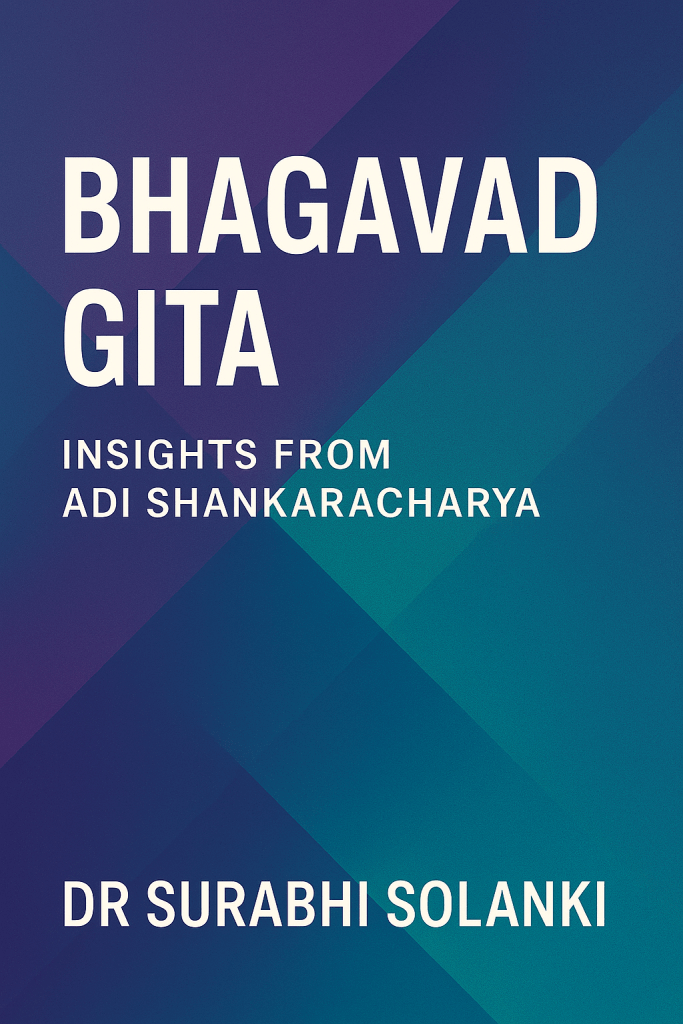
Bhagavad Gita (Non-Dual Interpretations)

While widely known as a devotional text, the Bhagavad Gita—especially through Adi Shankaracharya’s commentary—reveals a strong non-dual foundation centered on self-knowledge.


Yoga Vashistha

One of the most comprehensive explorations of non-duality, the Yoga Vashistha examines:

  • The nature of mind
  • Illusion (maya)
  • Liberation while living

It presents Advaita not as theory, but as lived understanding.


Modern Books on Non-Duality

Modern seekers often look for:

  • Books on non-duality in simple English
  • Practical Advaita Vedanta
  • Non-dual teachings for daily life

While classical texts are profound, they can be difficult to approach without guidance. This has led to a growing need for clear, modern interpretations that preserve depth without unnecessary complexity.


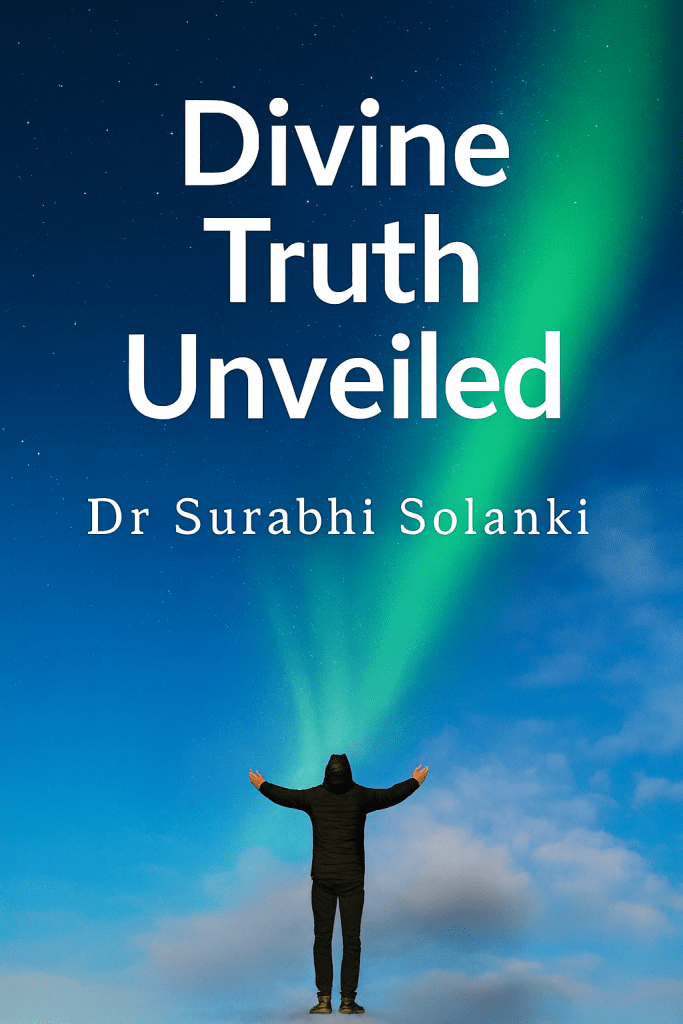
Divine Truth Unveiled: Non-Duality Through the Mandukya Karika

Among contemporary books on non-duality, Divine Truth Unveiled: Hidden Secrets of Gaudapada’s Mandukya Karika offers a distinctive contribution.

Rooted in one of the most authoritative non-dual texts—the Mandukya Karika—this book explores non-duality not as philosophy, but as direct insight into consciousness itself.

What Makes This Book Different?

  • Focuses on pure Advaita Vedanta, uncompromised by ritual or belief
  • Presents Gaudapada’s radical non-duality in clear, modern language
  • Guides the reader toward seeing, not believing
  • Emphasizes awareness beyond waking, dream, and deep sleep

Rather than offering interpretations layered with theology, Divine Truth Unveiled brings the reader face-to-face with the non-dual truth of the Self.


Non-Duality Is Not a Concept — It Is a Recognition

The greatest books on non-duality share one quality:
They do not try to improve the person.
They reveal that the person itself is a misunderstanding.

True non-dual wisdom:

  • Does not promise happiness
  • Does not offer techniques
  • Does not create spiritual identity

It dissolves ignorance through understanding.


Who Should Read Books on Non-Duality?

Books on non-duality are ideal for:

  • Serious spiritual seekers
  • Readers of Advaita Vedanta
  • Those dissatisfied with belief-based spirituality
  • Individuals seeking freedom from mental suffering
  • Readers drawn to consciousness studies

If questions like “Who am I?”, “What is real?”, and “What never changes?” resonate with you, non-dual literature speaks directly to your inquiry.


Why Non-Duality Matters Today

In a world dominated by:

  • Anxiety and identity confusion
  • Constant mental stimulation
  • External validation

Non-duality offers something rare:

Freedom through understanding, not escape.

It reveals that peace is not found by changing experience—but by understanding the experiencer.


Final Thoughts

Books on non-duality are not meant to decorate a bookshelf.
They are meant to undo misunderstanding.

Among both classical and modern works, texts grounded in authentic Advaita Vedanta—such as the Mandukya Karika and its clear interpretations—stand as timeless guides for those ready to look beyond appearances.

Non-duality does not give you something new.
It reveals what has always been present.

Adi Shankaracharya Books in English: A Complete Guide to Advaita Vedanta Wisdom

Adi Shankaracharya stands as one of the greatest philosophers in human history. His teachings shaped Advaita Vedanta, the non-dual philosophy that reveals the unity of Self and Brahman. For readers searching for Adi Shankaracharya books in English, his works offer profound clarity on consciousness, liberation, and the nature of reality.

Even after more than a thousand years, Shankaracharya’s insights remain strikingly relevant to modern seekers of truth.


Who Was Adi Shankaracharya?

Adi Shankaracharya (8th century CE) was a philosopher, teacher, and spiritual reformer who revitalized Vedantic thought across India. Through his writings and commentaries, he established non-duality (Advaita) as one of the most influential schools of Indian philosophy.

His central teaching is simple yet radical:

Brahman alone is real. The world is appearance. The Self is Brahman.


Why Read Adi Shankaracharya Books in English?

Most of Shankaracharya’s original works were written in Sanskrit. Modern readers therefore search for:

  • Adi Shankaracharya books in English
  • Adi Shankaracharya commentaries explained
  • Advaita Vedanta books in English
  • Shankaracharya philosophy for beginners

English translations and modern interpretations make his wisdom accessible to seekers worldwide—without requiring Sanskrit scholarship.


Core Teachings of Adi Shankaracharya

1. Advaita (Non-Duality)

There is only one reality—Brahman. The apparent division between self and world arises from ignorance (avidya).


2. Liberation Through Knowledge

Freedom (moksha) is attained not by ritual or action, but by direct knowledge of the Self.


3. The Illusory Nature of the World

The world is not denied, but understood as appearance, like a dream experienced during sleep.


4. The Identity of Atman and Brahman

The individual self (Atman) is not separate from the absolute reality (Brahman).


Important Adi Shankaracharya Books in English

Vivekachudamani (Crest-Jewel of Discrimination)

One of Shankaracharya’s most accessible works, focusing on:

  • Discrimination between the real and unreal
  • Detachment
  • Self-knowledge

It is often the starting point for Advaita Vedanta readers.


Upanishad Commentaries (Bhashyas)

Shankaracharya wrote authoritative commentaries on major Upanishads, including:

  • Katha Upanishad
  • Kena Upanishad
  • Mandukya Upanishad
  • Brihadaranyaka Upanishad

These works form the philosophical foundation of Advaita Vedanta.


Bhagavad Gita Bhashya

Adi Shankaracharya’s commentary on the Bhagavad Gita reveals:

  • Knowledge (Jnana) as the direct means to liberation
  • Karma and devotion as preparatory disciplines

It is considered one of the most important Gita interpretations ever written.


Brahma Sutra Bhashya

This is Shankaracharya’s most rigorous philosophical work, systematically establishing Advaita Vedanta.

It addresses:

  • The nature of Brahman
  • Liberation
  • The consistency of non-dual philosophy

Prakarana Granthas (Introductory Texts)

Short but powerful works such as:

  • Atma Bodha
  • Aparokshanubhuti
  • Upadesa Sahasri

These texts explain Advaita Vedanta in a direct and practical manner.


Challenges With Traditional English Translations

Many existing translations:

  • Use academic or archaic English
  • Assume prior philosophical background
  • Focus on literal accuracy rather than clarity

As a result, readers often struggle to internalize Shankaracharya’s insights.


What Makes a Good Adi Shankaracharya Book in English?

A high-quality English edition should:

✔ Use clear, modern language
✔ Preserve Advaita Vedanta principles
✔ Explain context and symbolism
✔ Avoid unnecessary scholastic complexity
✔ Focus on self-inquiry and understanding

Modern retellings and explanations help bridge ancient wisdom with contemporary life.


Why Adi Shankaracharya Is Relevant Today

In a world marked by:

  • Anxiety and identity confusion
  • Over-intellectualization
  • Constant mental noise

Shankaracharya’s teachings offer clarity through simplicity:

Suffering ends when ignorance ends.

His message aligns deeply with modern inquiry into consciousness and awareness.


Who Should Read Adi Shankaracharya Books?

These books are ideal for:

  • Students of Advaita Vedanta
  • Readers of Upanishads and Bhagavad Gita
  • Spiritual seekers beyond ritual
  • Those interested in consciousness studies
  • Anyone seeking inner freedom

Adi Shankaracharya vs Other Philosophical Thinkers

ThinkerPrimary Focus
BuddhaImpermanence and suffering
PatanjaliMind discipline
RamanujaQualified non-dualism
Adi ShankaracharyaPure non-duality (Advaita)

Shankaracharya presents one of the clearest non-dual frameworks ever articulated.


Frequently Asked Questions

Are Adi Shankaracharya books difficult to read?

Traditional translations can be challenging, but modern English interpretations make them accessible.

Is Advaita Vedanta religious?

No. It is philosophical and experiential, centered on self-knowledge.

Which Adi Shankaracharya book should I start with?

Vivekachudamani or Atma Bodha are excellent starting points.


Final Thoughts

Searching for Adi Shankaracharya books in English is not about reading philosophy—it is about awakening to truth.

Shankaracharya does not offer beliefs.
He offers clarity.

And clarity is liberation.

Bhagavad Gita Book in English: A Complete Guide to Timeless Wisdom for Modern Life

The Bhagavad Gita is one of the most influential spiritual texts in human history. Revered across cultures and philosophies, it offers profound guidance on life, duty, self-knowledge, and inner freedom. For readers searching for a Bhagavad Gita book in English, this sacred text provides clarity that transcends religion, time, and geography.

Rooted in Indian philosophy and Advaita Vedanta, the Bhagavad Gita speaks directly to the modern human condition—conflict, confusion, purpose, and the search for meaning.


What Is the Bhagavad Gita?

The Bhagavad Gita is a 700-verse dialogue between Prince Arjuna and Lord Krishna, set on the battlefield of Kurukshetra. It forms part of the Indian epic Mahabharata, yet stands as a complete spiritual teaching on its own.

At its heart, the Gita addresses a universal dilemma:

How should one live when faced with moral conflict and inner confusion?


Why the Bhagavad Gita Is Universally Relevant

Unlike purely devotional or ritualistic scriptures, the Bhagavad Gita:

  • Addresses real-life dilemmas
  • Balances action, knowledge, and devotion
  • Offers guidance without dogma
  • Speaks to seekers of all backgrounds

It does not ask you to renounce life, but to understand life correctly.


Core Teachings of the Bhagavad Gita

1. Karma Yoga – The Path of Right Action

The Gita teaches action without attachment to results. Freedom does not come from inaction, but from acting without ego and expectation.

“You have the right to action, but not to the fruits of action.”


2. Jnana Yoga – The Path of Knowledge

True liberation arises from self-knowledge—knowing the difference between the body, mind, and the eternal Self (Atman).

This teaching aligns deeply with Advaita Vedanta.


3. Bhakti Yoga – The Path of Devotion

Devotion in the Gita is not blind faith. It is love rooted in understanding, surrender grounded in clarity.


4. The Immortal Self

The Bhagavad Gita repeatedly affirms:

  • The Self is unborn
  • It does not die with the body
  • It is untouched by action or suffering

This truth dissolves fear and anxiety at their root.


Why Read a Bhagavad Gita Book in English?

Most modern readers search for:

  • Bhagavad Gita English translation
  • Bhagavad Gita explained in simple English
  • Bhagavad Gita for beginners
  • Bhagavad Gita with commentary

An English edition allows global readers to access its wisdom without needing Sanskrit knowledge, while still engaging deeply with its philosophy.


Challenges With Traditional English Translations

Many existing translations:

  • Use archaic or complex language
  • Focus on literal accuracy over understanding
  • Lack philosophical explanation
  • Assume prior familiarity with Indian concepts

As a result, many readers read the Gita—but do not absorb its meaning.


What Makes a Good Bhagavad Gita Book in English?

A truly valuable English edition should:

✔ Use clear, modern language
✔ Explain verses in context
✔ Preserve philosophical depth
✔ Balance devotion and inquiry
✔ Be relevant to daily life

A modern interpretation helps readers live the Gita, not just read it.


The Bhagavad Gita as a Guide for Modern Life

The Bhagavad Gita is not about war—it is about the inner battlefield:

  • Fear vs clarity
  • Duty vs desire
  • Ego vs wisdom

It teaches how to:

  • Act without stress
  • Live without fear
  • Remain centered amid chaos

This is why the Gita continues to guide leaders, thinkers, and seekers worldwide.


Who Should Read the Bhagavad Gita?

This book is ideal for:

  • Beginners in spiritual inquiry
  • Readers of Indian philosophy
  • Seekers of inner peace
  • Those facing life decisions
  • Readers of Upanishads and Vedanta

The Gita meets the reader where they are.


Bhagavad Gita vs Other Spiritual Texts

TextPrimary Focus
UpanishadsUltimate truth
Yoga SutrasMind discipline
Katha UpanishadImmortality
Bhagavad GitaLife, duty, and self-knowledge

The Gita uniquely integrates philosophy with daily living.


Why the Bhagavad Gita Is More Relevant Today Than Ever

In a world of:

  • Stress and anxiety
  • Moral confusion
  • Identity crises
  • Constant distraction

The Bhagavad Gita offers a timeless solution:

Inner freedom comes from right understanding, not from changing the world.


Frequently Asked Questions

Is the Bhagavad Gita religious?

No. It is philosophical and experiential, applicable to all seekers regardless of belief.

Is the Bhagavad Gita difficult to read?

Traditional versions can be challenging, but modern English commentaries make it accessible.

Is the Bhagavad Gita Advaita Vedanta?

Its teachings are foundational to Advaita Vedanta, especially in later chapters.


Final Thoughts

Searching for a Bhagavad Gita book in English is not merely about reading scripture—it is about learning how to live wisely.

The Gita does not promise escape from life.
It teaches mastery within life.

And that mastery is freedom.

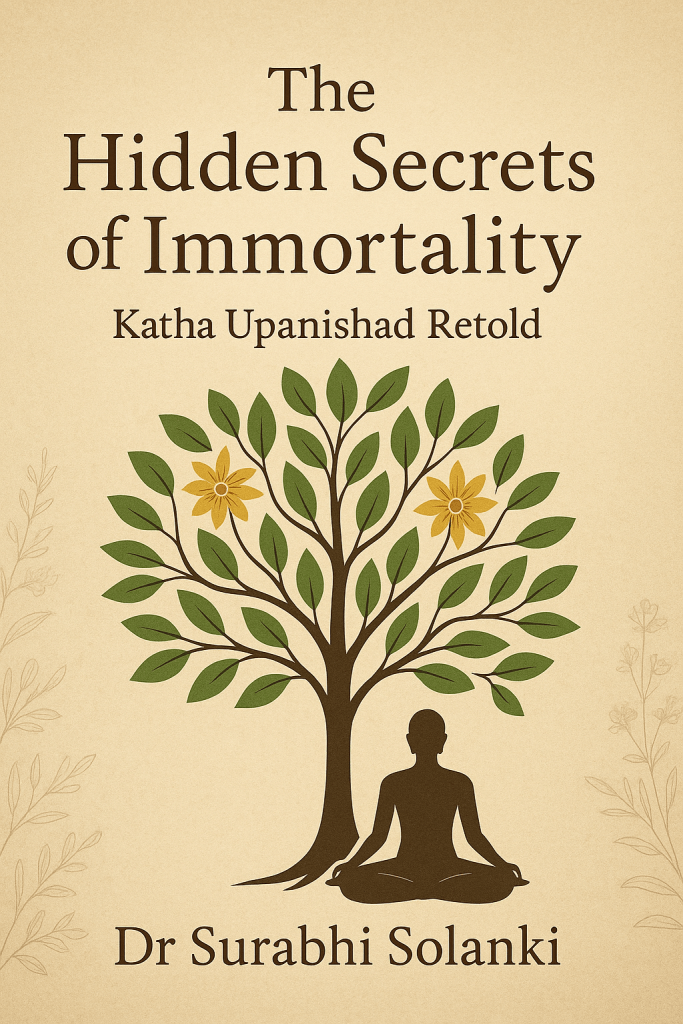
Katha Upanishad Book in English: A Timeless Guide to Immortality and Self-Knowledge

The Katha Upanishad is one of the most profound spiritual texts of ancient India, addressing humanity’s deepest question: What happens after death? For modern seekers searching for a Katha Upanishad book in English, this Upanishad offers timeless wisdom on immortality, the nature of the Self, and the path to ultimate freedom.

Rooted in Advaita Vedanta, the Katha Upanishad speaks not through ritual or belief, but through direct inquiry, clarity, and inner awakening.


What Is the Katha Upanishad?

The Katha Upanishad is a classical Sanskrit text belonging to the Krishna Yajurveda. It is presented as a powerful dialogue between Nachiketa, a sincere young seeker, and Yama, the Lord of Death.

Unlike most scriptures, the Katha Upanishad does not avoid death—it uses death as the doorway to truth.

Central Question

Is there something eternal beyond the body and mind?


Why the Katha Upanishad Is Unique Among Upanishads

The Katha Upanishad stands apart because it:

  • Uses a story format to convey deep philosophy
  • Directly addresses death, fear, and immortality
  • Emphasizes self-knowledge over rituals
  • Explains the difference between the Real and the pleasant

It is both philosophical and practical, making it deeply relevant even today.


Core Teachings of the Katha Upanishad

1. The Choice Between Shreyas and Preyas

The Upanishad introduces a timeless teaching:

  • Preyas – the pleasant, temporary, sensory path
  • Shreyas – the good, eternal, liberating path

Liberation comes from choosing truth over comfort.


2. The Immortal Self (Atman)

The body dies. The mind changes.
But the Self (Atman) is unborn, eternal, and indestructible.

“The Self is not born, nor does it die.”

This teaching forms the foundation of non-dual wisdom.


3. Mastery of the Mind and Senses

The famous chariot metaphor explains human experience:

  • Body = chariot
  • Senses = horses
  • Mind = reins
  • Intellect = driver
  • Self = the master

Without self-knowledge, life moves toward suffering.


4. Liberation Through Knowledge, Not Action

The Katha Upanishad clearly states:

  • Rituals cannot grant immortality
  • Actions alone do not liberate
  • Only knowledge of the Self leads to freedom

Why Read the Katha Upanishad Book in English?

Most seekers today look for:

  • Katha Upanishad English translation
  • Katha Upanishad explained in simple English
  • Katha Upanishad modern interpretation

An English version makes this profound wisdom:

  • Accessible to global readers
  • Relevant to modern psychological struggles
  • Clear without losing philosophical depth

Problems With Traditional English Translations

Many older translations:

  • Use archaic or academic language
  • Assume prior Sanskrit knowledge
  • Focus on literal translation, not understanding

As a result, readers often miss the living essence of the text.


What Makes a Good Katha Upanishad Book in English?

A meaningful English edition should:

✔ Use clear, modern language
✔ Preserve Advaita Vedanta teachings
✔ Explain symbolism and metaphors
✔ Focus on inner transformation
✔ Be readable for beginners and seekers


The Katha Upanishad as a Book of Immortality

At its heart, the Katha Upanishad is a manual for transcending fear of death. It does not promise heaven—it reveals fearlessness through self-knowledge.

This is why it continues to inspire:

  • Spiritual seekers
  • Philosophers
  • Psychologists
  • Non-dual teachers

Who Should Read the Katha Upanishad?

This book is ideal for:

  • Seekers questioning life and death
  • Readers of Advaita Vedanta
  • Those drawn to self-inquiry
  • Readers of the Upanishads and Bhagavad Gita
  • Anyone seeking inner freedom and clarity

Katha Upanishad vs Other Spiritual Texts

TextPrimary Focus
Bhagavad GitaLife, action, devotion
Yoga SutrasMind discipline
Mandukya UpanishadConsciousness states
Katha UpanishadImmortality and the Self

The Katha Upanishad uniquely addresses existential fear at its root.


Why the Katha Upanishad Is Especially Relevant Today

In an age of:

  • Anxiety
  • Fear of uncertainty
  • Identity confusion
  • Fear of death

The Katha Upanishad offers a radical truth:

Freedom comes not from controlling life, but from knowing who you truly are.


Frequently Asked Questions

Is the Katha Upanishad difficult to read?

Traditional versions can be challenging, but modern English interpretations make it accessible and deeply transformative.

Is the Katha Upanishad religious?

No. It is philosophical and experiential, not dogmatic or sectarian.

Is the Katha Upanishad part of Advaita Vedanta?

Yes. Its teachings are fully aligned with non-dual philosophy.


Final Thoughts

Searching for a Katha Upanishad book in English is not merely an academic pursuit—it is a journey toward fearlessness and truth.

The Katha Upanishad does not comfort the ego.
It awakens the Self.

And that awakening is freedom.

Yoga Vashistha Book in English: A Complete Guide to the Greatest Text of Self-Realization

The Yoga Vashistha is one of the most profound spiritual texts of ancient India, offering a direct, practical, and uncompromising vision of non-dual wisdom (Advaita Vedanta). For modern readers seeking clarity beyond ritual, belief, or dogma, finding a Yoga Vashistha book in English has become essential.

This article explores:

  • What the Yoga Vashistha is
  • Why it is unique among spiritual scriptures
  • What it teaches about mind, reality, and liberation
  • How to choose the best English version
  • Why it is increasingly relevant today

What Is the Yoga Vashistha?

The Yoga Vashistha is a classical philosophical text presented as a dialogue between Sage Vashistha and Prince Rama. Unlike most spiritual scriptures, it does not rely on religious commandments or external worship. Instead, it focuses entirely on self-inquiry, consciousness, and the nature of reality.

It belongs to the Jnana (knowledge) tradition of Indian philosophy and is closely aligned with Advaita Vedanta, the philosophy of non-duality.

Core Theme

Liberation is attained not by action, ritual, or belief—but by right understanding.


Why Is the Yoga Vashistha Considered Unique?

Unlike the Bhagavad Gita or the Upanishads, the Yoga Vashistha:

  • Uses stories and metaphors to explain deep metaphysical truths
  • Explores the mind as the root of bondage and freedom
  • Rejects blind faith and encourages direct insight
  • Explains illusion (Maya) in extraordinary psychological depth

It does not ask the seeker to escape the world, but to see the world correctly.


Key Teachings of Yoga Vashistha

1. The Mind Creates Reality

The text repeatedly states that the world experienced by an individual is a projection of the mind. When the mind is purified through understanding, suffering dissolves naturally.

2. Liberation Is Here and Now

Yoga Vashistha emphasizes Jivanmukti—freedom while living. Liberation is not an event after death but a shift in perception.

3. Renunciation Is Internal

True renunciation is not abandoning life, but abandoning false identification with thoughts, emotions, and ego.

4. No Conflict Between Life and Liberation

One can live fully in the world—work, relationships, responsibilities—while remaining inwardly free.


Why Read the Yoga Vashistha Book in English?

While the original text is in Sanskrit, most seekers today search for:

  • Yoga Vashistha English translation
  • Yoga Vashistha explained in simple English
  • Yoga Vashistha modern interpretation

A well-written English version makes the text:

  • Accessible to global readers
  • Relevant to modern psychological and spiritual inquiry
  • Free from excessive scholastic complexity

Challenges With Traditional English Translations

Many existing English translations:

  • Are extremely literal and difficult to read
  • Use outdated or archaic language
  • Focus more on scholarship than clarity
  • Lack contextual explanation

This often makes the Yoga Vashistha feel inaccessible, even though its wisdom is universal.


What Makes a Good Yoga Vashistha Book in English?

When choosing an English edition, look for:

✔ Clear, modern language
✔ Faithful to Advaita Vedanta principles
✔ Structured for contemporary readers
✔ Interpretive clarity rather than literal complexity
✔ Emphasis on inner transformation


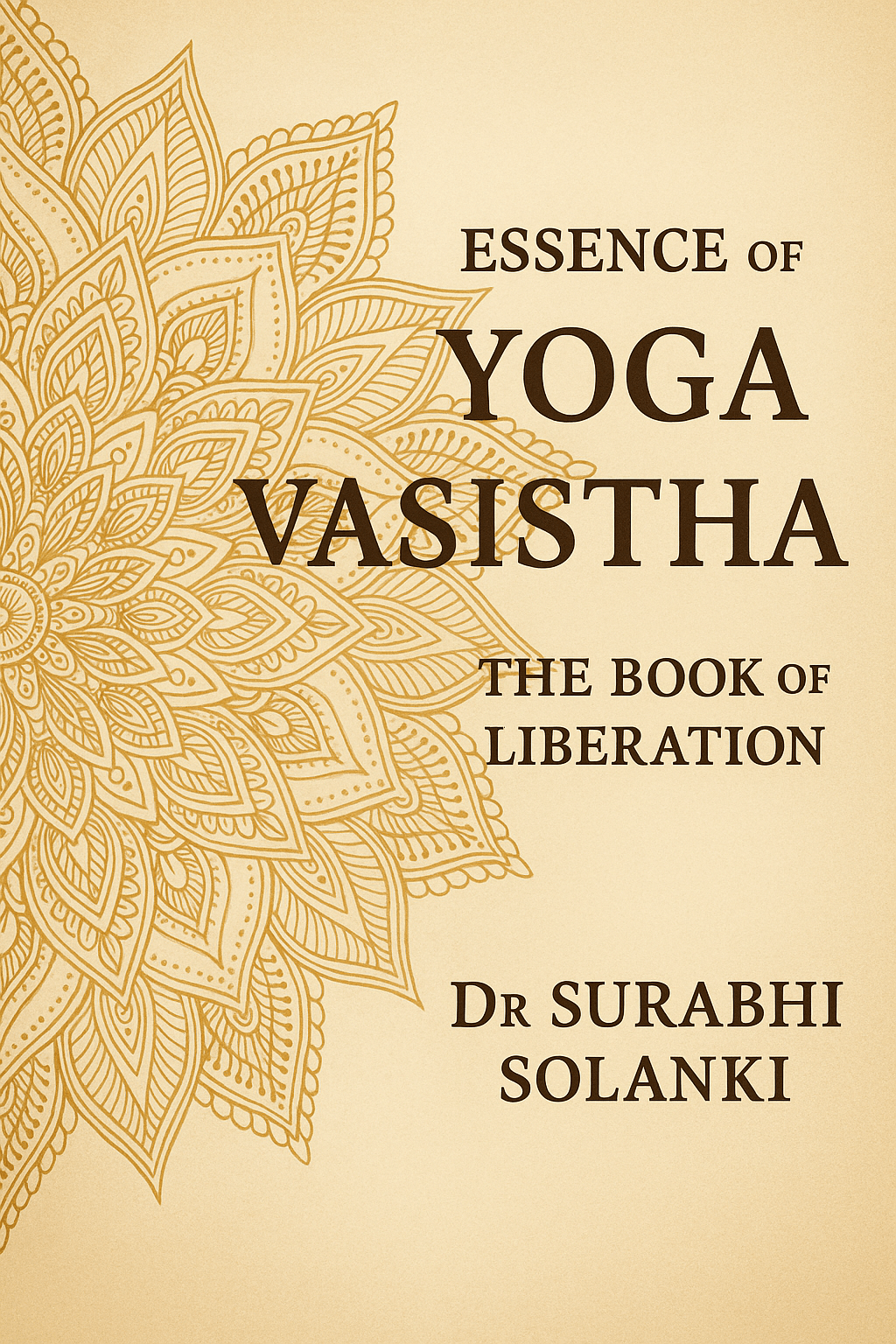
Essence of Yoga Vashistha: The Book of Liberation (Modern English Retelling)

A modern approach to the Yoga Vashistha presents the teachings not as a rigid scripture, but as a living dialogue on consciousness.

Such a book:

  • Retains the soul of the original text
  • Removes unnecessary mythological heaviness
  • Connects ancient wisdom with modern inner struggles
  • Helps readers apply insights in daily life

This makes the Yoga Vashistha not just a book to read—but a guide to awakening.


Who Should Read the Yoga Vashistha?

This book is ideal for:

  • Spiritual seekers beyond ritual and belief
  • Readers of Advaita Vedanta
  • Those interested in consciousness studies
  • Individuals seeking freedom from mental suffering
  • Readers of Upanishads, Ramana Maharshi, Nisargadatta Maharaj

If questions like “Who am I?”, “Why do I suffer?”, and “What is real?” resonate with you—the Yoga Vashistha speaks directly to your inquiry.


Yoga Vashistha vs Other Spiritual Texts

TextFocus
Bhagavad GitaAction + Devotion + Knowledge
UpanishadsUltimate metaphysical truth
Yoga SutrasMind discipline
Yoga VashisthaMind, illusion, liberation through understanding

The Yoga Vashistha goes deeper into mental bondage and freedom than almost any other text.


Why Yoga Vashistha Is More Relevant Today Than Ever

In a world of:

  • Anxiety
  • Identity crisis
  • Overthinking
  • Constant mental noise

The Yoga Vashistha offers something radical:

Freedom does not come from changing life—but from understanding the mind.

Its teachings align seamlessly with modern psychology, mindfulness, and non-dual awareness.


Frequently Asked Questions

Is Yoga Vashistha difficult to read?

Traditional versions can be challenging, but modern English retellings make it accessible and deeply transformative.

Is Yoga Vashistha religious?

No. It is philosophical and experiential, not religious or sectarian.

Can beginners read Yoga Vashistha?

Yes—if the language is clear and explanatory.

Is Yoga Vashistha Advaita Vedanta?

Yes. It is one of the most complete expositions of Advaita Vedanta.


Final Thoughts

Searching for a Yoga Vashistha book in English is not merely about reading another spiritual text—it is about re-learning how to see reality.

The Yoga Vashistha does not promise comfort.
It offers clarity.
And clarity is the beginning of freedom.

About the Author
Dr. Surabhi Solanki is an author and interpreter of Advaita Vedanta and classical Indian philosophy. Her writings present ancient wisdom—such as the Yoga Vashistha, Upanishads, and Bhagavad Gita—in clear, modern language for contemporary seekers.

Yoga Vasistha Book Cover image