In Vedanta philosophy, consciousness (known as Chit or Chaitanya) is not a byproduct of the brain or matter, nor a secondary phenomenon. It is the fundamental, primary reality—the very essence of existence. Vedanta, particularly Advaita Vedanta (non-dualism), teaches that consciousness is eternal, infinite, unchanging, and self-luminous (Svayamprakasha). It is the pure awareness that illuminates all experiences, thoughts, and objects without itself being an object.
To explore all topics in one place, visit our complete knowledgebase.
Consciousness in Vedanta is synonymous with Atman (the true Self within each individual) and Brahman (the ultimate, all-pervading reality). The famous Mahavakya (great saying) from the Upanishads, “Tat Tvam Asi” (“Thou art That”), declares that the individual consciousness (Atman) is identical with the universal consciousness (Brahman). This non-dual understanding forms the core of Vedantic wisdom: there is only one consciousness appearing as many due to ignorance (Avidya) and illusion (Maya).
This article explains the nature of consciousness in Vedanta, its key characteristics, distinction from the mind and body, levels of reality, and its profound relevance today.
Core Concepts: Chit, Atman, and Brahman
Vedanta describes the ultimate reality as Sat-Chit-Ananda — absolute existence (Sat), pure consciousness (Chit), and infinite bliss (Ananda). These are not three separate attributes but the inseparable nature of one reality.
- Chit (Consciousness): The knowing principle, the light of awareness that makes all cognition possible. It is not “conscious of” something in a subject-object sense at the absolute level; it is pure, non-intentional awareness that simply is. Everything we know or experience appears within this consciousness.
- Atman: The innermost Self or true “I” in every being. Atman is pure consciousness, the silent witness (Sakshi) that observes the body, mind, emotions, and world without being affected by them. It remains constant through waking, dreaming, and deep sleep states. The individual sense of “I” (ego or Jiva) is a limited reflection or apparent conditioning of Atman by the mind and body.
- Brahman: The infinite, all-pervading consciousness that underlies the entire universe. Brahman is the substratum of all existence—”one without a second.” Atman and Brahman are ultimately identical; the apparent difference arises only from limiting adjuncts (Upadhis) like the body-mind complex.
As the Upanishads declare: “Prajnanam Brahma” (Consciousness is Brahman). The Brihadaranyaka Upanishad further states that Atman is the light that manifests consciousness in the organs and coordinates all experiences.
Consciousness as the Witness: Beyond Mind and Body
Vedanta sharply distinguishes consciousness from the mind and body:
- The mind (Antahkarana) is an instrument — subtle matter that thinks, feels, doubts, and perceives. It is inert by itself and gains sentiency only when illumined by consciousness (Atman).
- The body is gross matter, changing and perishable.
- Consciousness (Atman) is the unchanging witness that knows the mind and body but is never known as an object. It is self-evident and self-luminous — we do not need another consciousness to know consciousness.
This is illustrated through analogies:
- Consciousness is like the sun that illumines objects without being affected by them.
- Or like space that pervades everything yet remains untouched.
- In the states of consciousness (as explained in the Mandukya Upanishad): Waking (Jagrat), dreaming (Svapna), and deep sleep (Sushupti) are transient, but the fourth state (Turiya) is pure consciousness — the witness beyond all three.
When the mind is still (as in meditation), the pure nature of consciousness shines more clearly. Self-inquiry (“Who am I?”), taught by Ramana Maharshi, traces thoughts back to their source in pure awareness, revealing the ego as a mere thought arising in consciousness.
Levels of Reality: Paramarthika and Vyavaharika
Advaita Vedanta speaks of two levels:
- Paramarthika Satya (absolute reality): Only non-dual Brahman/Atman exists. Consciousness is one, infinite, and without division. The world and multiplicity are illusory appearances.
- Vyavaharika Satya (empirical or transactional reality): From the standpoint of everyday experience, consciousness appears reflected or limited. Here we speak of individual consciousness (Jiva-Chaitanya), cosmic consciousness (Ishvara as the controller of Maya), and the witnessed world.
These levels reconcile devotion to a personal God (Ishvara) with non-dual realization. At the empirical level, consciousness operates through the mind; at the absolute level, it is the sole reality.
Consciousness in Creation and the Role of Maya
According to Vedanta, the universe is not created “out of” matter but appears within consciousness through the power of Maya (the creative illusion of Brahman). Matter and mind are manifestations or modulations of consciousness itself. Consciousness does not evolve from matter; rather, the apparent material world arises as an appearance in consciousness.
This inverts the modern materialist view (where consciousness emerges from brain processes). In Vedanta, consciousness is primary and fundamental — the ground of all being. The “hard problem of consciousness” (why physical processes give rise to subjective experience) dissolves because matter itself is an appearance within consciousness.
Practical Implications: Realizing Consciousness
The goal of Vedanta is Moksha (liberation) — the direct realization that “I am pure consciousness” (Aham Brahmasmi). This ends suffering rooted in misidentification with the limited body-mind-ego.
Paths to realization include:
- Jnana Yoga: Inquiry, study of scriptures (Upanishads, Bhagavad Gita), and discrimination between the real (consciousness) and unreal (appearances).
- Meditation and Self-Inquiry: Observing the witness behind all experiences.
- Bhakti or Karma Yoga: Preparatory practices that purify the mind, making it a clear reflector of consciousness.
Upon realization, one lives with equanimity, seeing all beings as manifestations of the same consciousness.
Consciousness in Vedanta vs. Modern Perspectives
Vedanta’s view resonates with aspects of contemporary consciousness studies while offering a radical alternative to materialism. Neuroscience maps neural correlates of experience (the “easy problems”), but struggles with the “hard problem” of why experience arises at all. Vedanta posits consciousness as ontological — the fundamental reality — from which the brain and world appear.
Many modern teachers, including Swami Sarvapriyananda, note that Vedanta provides a coherent framework: consciousness is not produced by the brain; the brain is an appearance within consciousness. This aligns with certain quantum interpretations (observer effect) and panpsychist or idealist philosophies, though Vedanta remains non-dual.
Conclusion: Consciousness as Your True Nature
In Vedanta, consciousness is not something you have — it is what you are. It is the ever-present, self-luminous awareness that knows all states of experience yet remains untouched. Atman is Brahman; the individual light of awareness is the same as the infinite ocean of consciousness.
This realization brings freedom, bliss, and unity with all existence. As the Upanishads affirm, the Self is closer than the closest — already whole, already aware, already free.
Whether through philosophical study, meditation, or self-inquiry, Vedanta invites you to turn inward and discover: the consciousness reading these words right now is the ultimate reality itself.
FAQ: Common Questions About Consciousness in Vedanta
Is consciousness the same as the mind?
No. The mind is an instrument illumined by consciousness. Consciousness is the unchanging witness; the mind changes with thoughts and emotions.
Does Vedanta say the world is unreal?
The world is Mithya — apparently real at the empirical level but not ultimately real from the absolute standpoint. It appears within consciousness.
Can science prove or disprove Vedantic consciousness?
Science operates at the empirical level and excels at studying functions and correlates. Vedanta addresses the fundamental nature of the knower, which transcends objective measurement.
How do I experience pure consciousness?
Through consistent self-inquiry (“Who am I?”), meditation, and scriptural study under guidance. Glimpses arise when the mind is quiet; abiding realization comes with deeper practice.
Is consciousness personal or universal?
Ultimately universal and non-dual (Brahman). Individually, it appears limited until ignorance is removed.
Consciousness in Vedanta is not a mystery to be solved but the ever-present reality to be recognized. The journey leads from “I am conscious” to the profound truth: “I am Consciousness.”

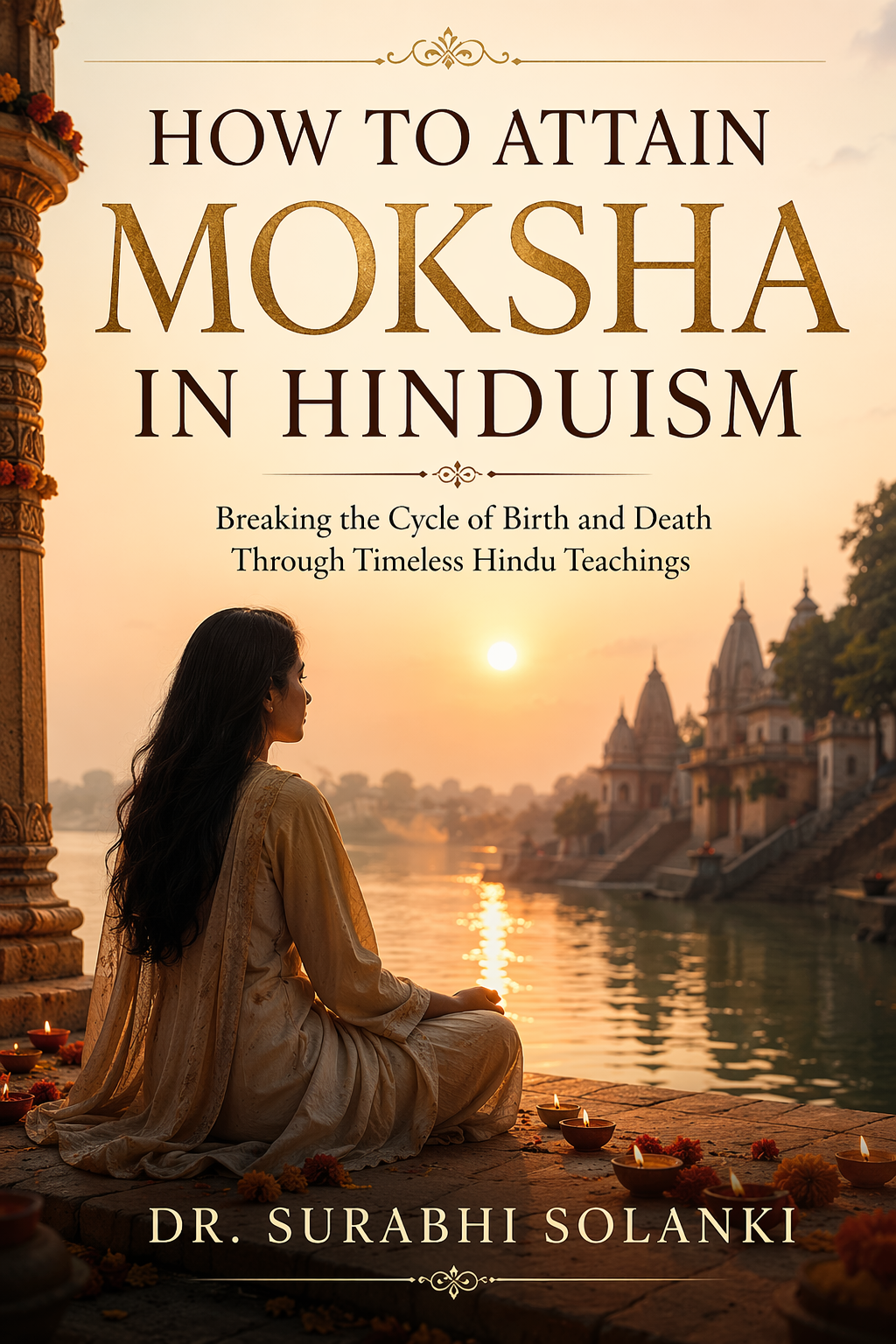
How to Attain Moksha in Hinduism
Break the cycle of birth and death through timeless wisdom of Vedanta and Upanishads.
⭐ 4.8 Rating • Trusted by 1,000+ Readers Worldwide
Start your journey toward liberation today.