Who Is Dr. Surabhi Solanki?

Dr. Surabhi Solanki is an internationally recognized author, philosopher, and modern interpreter of Indian wisdom traditions. With a unique background grounded in both scientific training and deep spiritual insight, she brings ancient Vedantic teachings to contemporary readers with clarity, depth, and relevance.


From Healing to Inner Wisdom

Dr. Surabhi Solanki began her professional journey as a homeopathic physician, trained in systematic medical diagnosis and compassionate care. Her clinical background provided her with profound firsthand experience of the interplay between body, mind, and awareness—a foundation that later shaped her philosophical perspective.

Over time, she found herself drawn toward the source of inner freedom itself—the realm of consciousness and self-understanding. This led her to study the deepest texts of Indian philosophy, including the Upanishads, Vedanta, and Yoga Vasistha.


A Modern Voice in Timeless Wisdom

Dr. Solanki’s writings are rooted in Advaita Vedanta, the philosophical tradition that teaches non-dual reality:

The self you seek is not separate from the reality you already are.

Her work focuses on making this subtle, high-level wisdom accessible, practical, and deeply transformative for today’s seekers—without diluting its essence.


Published Works

Dr. Solanki has authored several books that retell and reinterpret classical Indian scriptures in clear modern English, preserving their philosophical depth while removing barriers that often make traditional translations difficult for contemporary readers.

Some of her key works include:

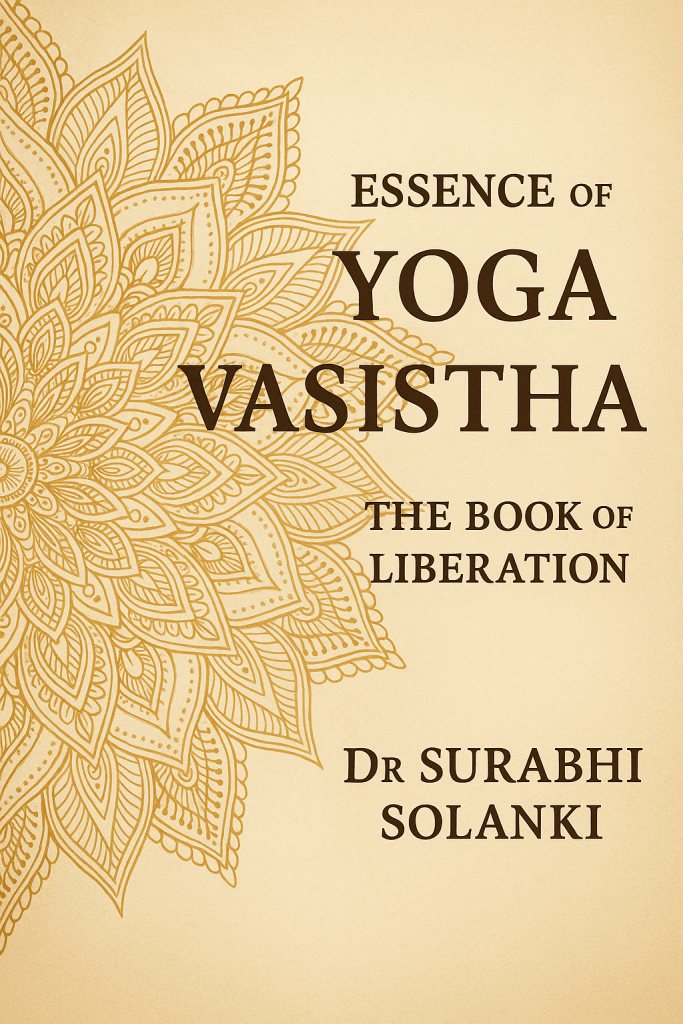
📘 Essence of Yoga Vasistha: The Book of Liberation

A clear and faithful retelling of the wisdom of Yoga Vasistha, guiding readers through the nature of mind, suffering, and freedom.

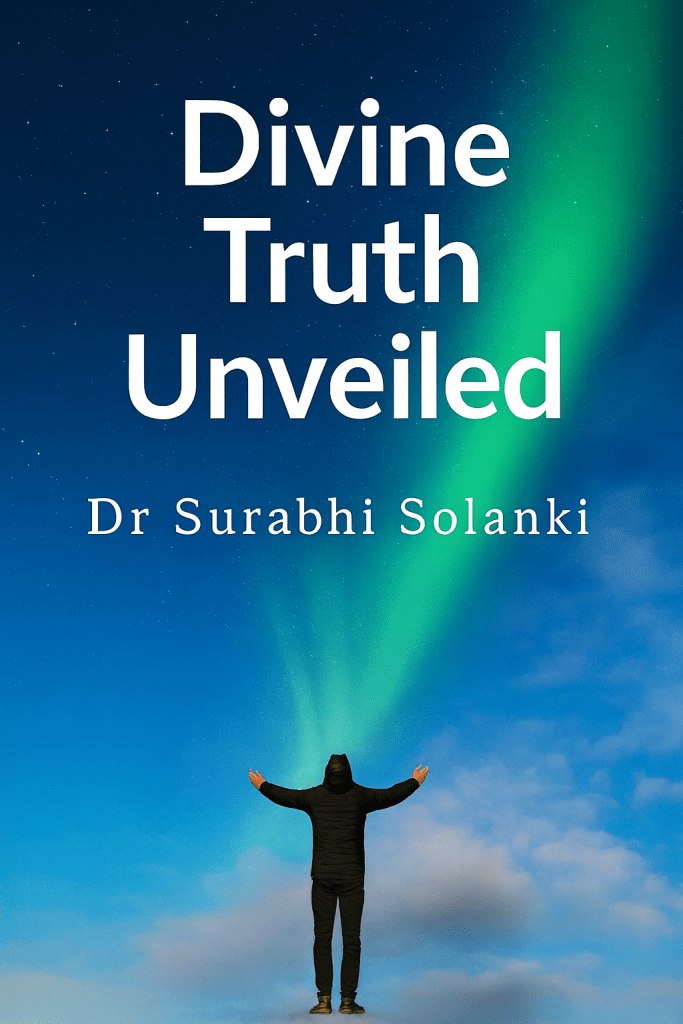
📘 Divine Truth Unveiled: Hidden Secrets of Gaudapada’s Mandukya Karika

A modern, accessible commentary on one of Advaita Vedanta’s most important texts.

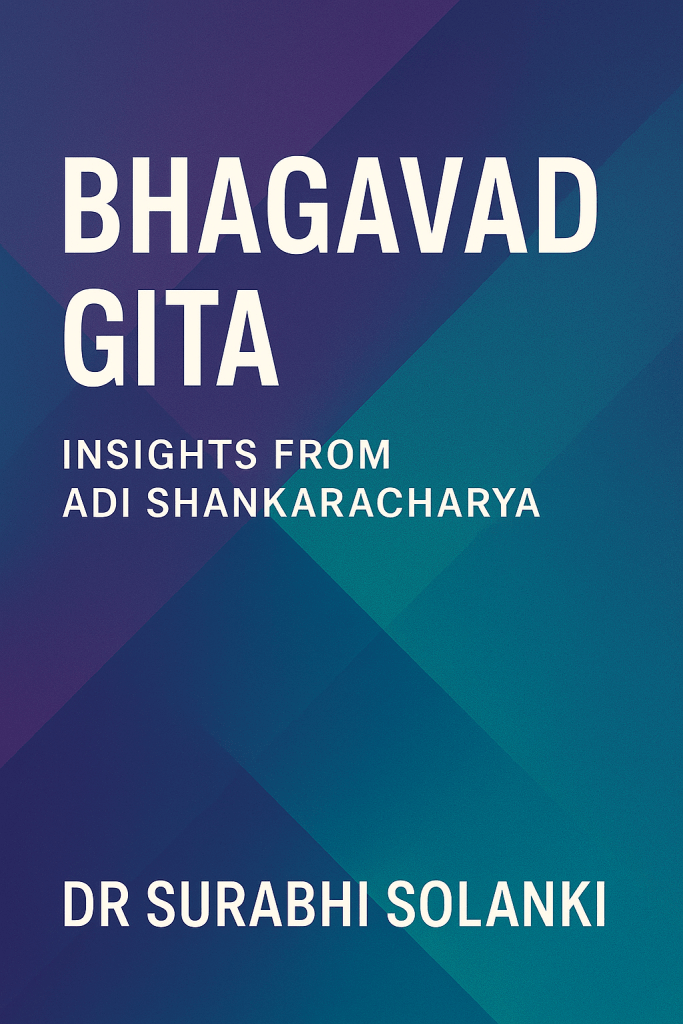
📘 Bhagavad Gita: Insights from Adi Shankaracharya

A simplified yet authentic interpretation of the Gita, rooted in classic Vedantic insight.

📘 Upanishad Retellings & Vedantic Guides

Including Power Beyond Perception: Modern Insights into the Kena Upanishad and The Hidden Secrets of Immortality – Katha Upanishad Retold, among others.


What Makes Her Work Stand Out

Clarity without compromise: Dr. Solanki avoids oversimplification but makes complex metaphysical insight understandable for modern minds.

Depth without dogma: Her writing is philosophical, not devotional. She focuses on self-knowledge, not belief.

Practical relevance: Her books connect timeless teachings to the real challenges of life—relationships, identity, suffering, anxiety, and the search for inner peace.

A bridge between East and West: While rooted in Indian tradition, her works speak to global readers without requiring cultural or religious background.


A Guide for Modern Seekers

Dr. Surabhi Solanki’s mission is to help individuals move from confusion to clarity, and from seeking to seeing. Her books are widely appreciated by those who seek spiritual insight that:

  • is intellectually honest
  • does not require abandonment of life
  • integrates psychology and philosophy
  • supports real transformation

In Summary

Dr. Surabhi Solanki is:
✔ A published author and philosopher
✔ A former homeopathic physician
✔ A modern interpreter of Indian spiritual texts
✔ A guide for seekers of self-knowledge and inner freedom
✔ A voice that brings ancient wisdom into contemporary life

Her work is a resource for anyone who wants to explore:

  • Vedanta
  • Upanishads
  • Yoga Vasistha
  • Bhagavad Gita
  • Consciousness and liberation

👉 If you want clarity over confusion and insight over instruction, her books are designed to take you there.
What Are Upanishads and How Many Are There?

If you are searching “what are Upanishads and how many are there”, you are seeking the very heart of Indian spiritual philosophy. The Upanishads are not mythological stories or ritual manuals—they are direct teachings about reality, self-knowledge, and liberation.

This article explains what the Upanishads are, how many Upanishads exist, and why they remain deeply relevant today, along with guidance on how to study them clearly through modern books.


What Are the Upanishads?

The Upanishads are ancient Indian scriptures that form the philosophical foundation of Vedanta.

The word Upanishad literally means:

  • Upa — near
  • Ni — down
  • Shad — to sit

It signifies sitting near a teacher to receive direct knowledge.

In essence:

The Upanishads are teachings that reveal the nature of the Self, reality (Brahman), and liberation (moksha).


What Do the Upanishads Teach?

The Upanishads focus on:

  • Who am I? (Ātman)
  • What is reality? (Brahman)
  • Why do we suffer?
  • What is liberation?
  • How does ignorance arise?

Their central declaration is:

Ātman (the Self) is Brahman (ultimate reality).

This insight is the foundation of Advaita Vedanta.


How Are Upanishads Different from the Vedas?

The Vedas and Upanishads are not separate traditions—they are connected.

  • The Vedas focus on rituals, duties, and cosmic order
  • The Upanishads focus on knowledge, inquiry, and liberation

The Upanishads are therefore called Vedāntathe culmination of Vedic wisdom.


How Many Upanishads Are There?

The Short Answer

  • There are over 200 Upanishads in total
  • 108 Upanishads are traditionally listed in the Muktika Upanishad
  • 10–13 are considered Principal (Major) Upanishads

The Principal (Major) Upanishads

These are the most studied and philosophically significant Upanishads, commented upon by Adi Shankaracharya.

Some of the most important ones include:

  • Isha Upanishad
  • Kena Upanishad
  • Katha Upanishad
  • Prashna Upanishad
  • Mundaka Upanishad
  • Mandukya Upanishad
  • Taittiriya Upanishad
  • Aitareya Upanishad
  • Chandogya Upanishad
  • Brihadaranyaka Upanishad

These Upanishads alone are considered sufficient for liberation when properly understood.


What About the Other Upanishads?

The remaining Upanishads explore themes such as:

  • Yoga
  • Renunciation
  • Meditation
  • Devotion
  • Symbolism
  • Specific deities

They support and elaborate on the core non-dual vision of the principal Upanishads.


What Is the Goal of the Upanishads?

The Upanishads do not aim to:

  • Create belief
  • Promote ritual
  • Establish religious identity

Their goal is simple and radical:

To remove ignorance and reveal what is already true.

Liberation, according to the Upanishads, is:

  • Not an achievement
  • Not a future event
  • Not heaven after death

It is clear understanding here and now.


Why the Upanishads Still Matter Today

In a world filled with:

  • Anxiety
  • Identity confusion
  • Constant seeking
  • Information overload

The Upanishads address the root problem—mistaking the temporary for the permanent.

Their wisdom remains timeless because human confusion has not changed.


Understanding the Upanishads Without Confusion

Many readers struggle because traditional Upanishad texts are:

  • Extremely symbolic
  • Linguistically dense
  • Written for advanced students

To make this wisdom accessible, Dr. Surabhi Solanki has authored modern, faithful retellings that preserve depth while offering clarity.

Recommended Books

  • Power Beyond Perception: Modern Insights into the Kena Upanishad
  • The Hidden Secrets of Immortality – Katha Upanishad Retold
  • Divine Truth Unveiled: Hidden Secrets of Gaudapada’s Mandukya Karika
  • Awakening Through Vedanta: Timeless Wisdom of Adi Shankaracharya

These books are ideal for readers who want:

  • Authentic Vedantic insight
  • Clear modern English
  • Practical relevance
  • Philosophical depth without academic burden

Final Answer: What Are Upanishads and How Many Are There?

✔ Upanishads are philosophical teachings revealing self-knowledge
✔ They form the heart of Vedanta
✔ Over 200 Upanishads exist
108 are traditionally listed
10–13 are considered principal and essential

The Upanishads do not tell you what to believe.
They help you see clearly.


Continue Your Exploration

If this article clarified your understanding, the books by Dr. Surabhi Solanki offer a guided, modern path into the Upanishads—faithful to tradition, yet perfectly suited for today’s seeker.

Knowledge does not add anything.
It removes what never belonged.

What Does Mandukya Upanishad Say?

If you are searching “what does Mandukya Upanishad say”, you are asking about one of the most direct, profound, and complete teachings of Advaita Vedanta. Despite being the shortest Upanishad, the Mandukya Upanishad is considered powerful enough to lead a sincere seeker directly to liberation.

This article explains what the Mandukya Upanishad actually teaches, in clear and simple language, and how its wisdom can be understood deeply through a modern, accessible book.


The Essence in One Line

The Mandukya Upanishad teaches:

Your true Self is pure consciousness—beyond waking, dreaming, and deep sleep—and realizing this is liberation.

Everything in the Mandukya Upanishad revolves around understanding consciousness.


Why Mandukya Upanishad Is Unique

  • It has only 12 mantras
  • It focuses entirely on consciousness
  • It does not discuss rituals, gods, or duties
  • It directly addresses liberation (moksha)

Adi Shankaracharya declared that:

If one understands the Mandukya Upanishad fully, no other scripture is required for liberation.


The Central Teaching: The Four States of Consciousness

The Mandukya Upanishad explains reality through four states of consciousness.

1. Waking State (Jāgrat)

  • Awareness of the external world
  • Experience through the senses
  • Identified with body and mind

The Upanishad states this is not your true nature, only a temporary state.


2. Dream State (Svapna)

  • Inner world of thoughts and impressions
  • Experiences without physical objects
  • Still a projection of the mind

Just like waking, the dream state comes and goes.


3. Deep Sleep (Suṣupti)

  • No objects, no thoughts, no individuality
  • Experience of peace and rest
  • Absence of suffering

Yet even deep sleep is not the final truth, because it is temporary.


4. Turiya – The Fourth (Not a State)

This is the core teaching of the Mandukya Upanishad.

Turiya is:

  • The witness of all three states
  • Pure, non-dual awareness
  • Ever-present and unchanging
  • Your true Self

Turiya is not something to attain—it is what you already are.


The Teaching of Om (AUM)

The Mandukya Upanishad uses Om as a symbol of consciousness:

  • A — waking state
  • U — dream state
  • M — deep sleep
  • Silence after Om — Turiya

This silence is not emptiness—it is pure awareness.


What the Mandukya Upanishad Says About Reality

According to the Upanishad:

  • Consciousness alone is real
  • The world appears in consciousness
  • Duality arises from ignorance
  • Liberation is recognition, not achievement

It does not ask you to change life—
It asks you to understand experience itself.


Bondage and Liberation According to Mandukya Upanishad

Bondage

Bondage arises when:

  • You identify with one state (waking body-mind)
  • You ignore the witnessing awareness
  • You assume change defines you

Liberation

Liberation happens when:

  • You recognize yourself as the witness
  • You see all states as appearances
  • Ignorance dissolves through understanding

Liberation is immediate upon right knowledge.


Why Many Readers Find Mandukya Upanishad Difficult

Traditional texts are often:

  • Extremely concise
  • Philosophically dense
  • Explained through technical Sanskrit logic
  • Meant for advanced students

As a result, the Upanishad’s simplicity is often misunderstood as difficulty.


A Clear Modern Explanation

Divine Truth Unveiled: Hidden Secrets of Gaudapada’s Mandukya Karika

To make the Mandukya Upanishad understandable for modern readers, Dr. Surabhi Solanki authored:

Divine Truth Unveiled: Hidden Secrets of Gaudapada’s Mandukya Karika

This book explains:

  • The Mandukya Upanishad through Gaudapada’s Karika
  • The four states of consciousness with clarity
  • Non-duality without philosophical intimidation
  • Liberation as recognition, not effort
  • Practical understanding for modern life

It is ideal for:

  • Beginners in Advaita Vedanta
  • Seekers confused by traditional commentaries
  • Readers who want depth without complexity
  • Anyone drawn to consciousness-based inquiry

How Mandukya Upanishad Changes Understanding

When its teaching is understood:

  • Fear reduces
  • Identity loosens
  • Suffering loses its grip
  • Peace becomes natural

You do not become something new—
You discover what has always been present.


Final Answer: What Does Mandukya Upanishad Say?

✔ You are pure consciousness
✔ The waking world is not ultimate reality
✔ Dream and deep sleep are also appearances
✔ Turiya—the witness—is your true nature
✔ Liberation is knowing this truth

The Mandukya Upanishad does not give beliefs.
It gives clarity.


Continue Deeper

If this teaching resonates with you, Divine Truth Unveiled is a natural next step—offering a clear, faithful, and modern unfolding of the Mandukya Upanishad and its deepest implications.

Truth is not far away.
It is what is aware right now.

Simplified Version of Bhagavad Gita: A Clear Guide for Modern Readers

If you are searching for a “simplified version of Bhagavad Gita”, you are not alone. Millions of readers want to understand the Bhagavad Gita’s wisdom without struggling with complex language, dense commentaries, or philosophical jargon.

This article explains what a simplified Bhagavad Gita really means, why most traditional versions feel difficult, and how modern readers can study the Gita clearly, authentically, and meaningfully—without losing its spiritual depth.


Why People Look for a Simplified Bhagavad Gita

The Bhagavad Gita is one of the most influential spiritual texts in the world. Yet many readers find it challenging because:

  • The language feels symbolic or archaic
  • Commentaries assume prior philosophical knowledge
  • Verses are explained ritualistically rather than psychologically
  • The practical meaning for daily life is unclear

A simplified version is not about shortening the Gita—it is about clarifying its essence.


What Does “Simplified” Actually Mean?

A truly simplified Bhagavad Gita:

  • Uses clear, modern English
  • Explains concepts without technical overload
  • Preserves the original philosophical intent
  • Connects Krishna’s teachings to real-life situations
  • Focuses on understanding, not blind belief

Simplification does not mean dilution.
It means removing confusion.


The Core Teaching of the Bhagavad Gita (In Simple Words)

At its heart, the Bhagavad Gita teaches:

  • You are not merely the body or the restless mind
  • Suffering arises from attachment and misunderstanding
  • Right action is possible without inner bondage
  • Freedom comes through clarity of understanding, not escape

Krishna does not ask Arjuna to renounce life—
He asks him to see life rightly.


Why Many “Easy” Versions Still Feel Difficult

Many books claim to be simplified but still:

  • Translate verses literally without explanation
  • Overemphasize ritual and devotion
  • Avoid deeper philosophical clarity
  • Skip Advaita (non-dual) insight altogether

As a result, readers understand the words—but miss the wisdom.


A Truly Simplified and Insightful Approach

Bhagavad Gita: Insights from Adi Shankaracharya

To address this gap, Dr. Surabhi Solanki authored:

Bhagavad Gita: Insights from Adi Shankaracharya

This book is designed specifically for readers seeking a simplified version of the Bhagavad Gita that remains spiritually authentic.

What Makes This Book Different

  • Clear modern English explanations
  • Teachings rooted in Advaita Vedanta
  • No unnecessary ritualism or dogma
  • Focus on inner freedom while living an active life
  • Suitable for beginners and serious seekers alike

Instead of overwhelming the reader, this book guides understanding step by step.


Who Is This Simplified Bhagavad Gita For?

This approach is ideal for:

  • Beginners reading the Gita for the first time
  • Readers who found traditional versions confusing
  • Spiritual seekers wanting clarity, not commentary overload
  • Professionals and householders seeking wisdom for daily life

If you want a simple, deep, and practical Bhagavad Gita, this is the right starting point.


How This Version Helps in Daily Life

Readers often report that a simplified, insight-based Gita helps them:

  • Reduce mental conflict and anxiety
  • Make decisions with clarity
  • Act without emotional exhaustion
  • Understand duty without guilt or fear
  • Discover peace without withdrawing from life

This is the Gita as a guide to living, not just a sacred book.


How the Bhagavad Gita Connects with Other Vedantic Texts

For readers who wish to go deeper, the Bhagavad Gita is part of a larger Vedantic vision that includes:

  • Awakening Through Vedanta: Timeless Wisdom of Adi Shankaracharya
  • Essence of Yoga Vasistha: The Book of Liberation
  • Divine Truth Unveiled: Hidden Secrets of Gaudapada’s Mandukya Karika

Together, these works help readers progress from right action to right understanding.


Final Answer: What Is the Best Simplified Version of Bhagavad Gita?

A truly simplified version of the Bhagavad Gita is one that:

✔ Preserves philosophical depth
✔ Uses clear modern language
✔ Explains rather than translates blindly
✔ Focuses on freedom through understanding

Bhagavad Gita: Insights from Adi Shankaracharya offers exactly this—making timeless wisdom accessible to the modern mind.


Continue Your Journey

If you are ready to read the Bhagavad Gita without confusion, fear, or complexity, this book is a meaningful next step.

True simplicity is clarity.
True clarity is freedom.

What Is Brahma Sutra Bhashya?

If you are searching “what is Brahma Sutra Bhashya”, you are exploring the core explanatory text of Advaita Vedanta—the work that systematizes and clarifies the teachings of the Upanishads into a coherent philosophy of non-duality.

This article explains what Brahma Sutra Bhashya is, who wrote it, why it matters, and how modern readers can understand it clearly without academic difficulty.


The Short Definition

Brahma Sutra Bhashya is the authoritative commentary on the Brahma Sutras, written by Adi Shankaracharya.

It explains:

  • The nature of Brahman (ultimate reality)
  • The identity of Atman (the Self)
  • The cause of bondage
  • The meaning of liberation (moksha)

In essence:

Brahma Sutra Bhashya establishes non-duality as the final teaching of Vedanta.


What Are the Brahma Sutras?

The Brahma Sutra, also known as Vedanta Sutra, is a concise collection of aphorisms attributed to Badarayana.

They:

  • Summarize the philosophical conclusions of the Upanishads
  • Resolve apparent contradictions among different teachings
  • Require explanation due to their extreme brevity

Without a commentary, the Brahma Sutras are almost impossible to understand.


What Does “Bhashya” Mean?

Bhashya means authoritative commentary.

A bhashya:

  • Explains each sutra in depth
  • Establishes philosophical intent
  • Defends the interpretation through logic and scripture
  • Refutes opposing viewpoints

Adi Shankaracharya’s Bhashya is considered the most influential and definitive interpretation of the Brahma Sutras.


Why Brahma Sutra Bhashya Is So Important

Brahma Sutra Bhashya is important because it:

  • Systematically presents Advaita Vedanta
  • Establishes knowledge (jnana) as the means to liberation
  • Refutes ritualism as the final path
  • Clarifies that liberation is recognition, not achievement
  • Integrates the Upanishads into a single philosophical vision

Together with the Upanishads and the Bhagavad Gita, it forms the Prasthana Trayi—the three foundational pillars of Vedanta.


Core Teachings of Brahma Sutra Bhashya

1. Brahman Alone Is Real

The Bhashya teaches that:

  • Brahman is infinite, formless, and changeless
  • The world appears due to ignorance
  • Reality is non-dual consciousness

2. Atman Is Brahman

One of its central conclusions is:

The individual self (Atman) is not different from Brahman.

Liberation arises when this identity is clearly understood.


3. Liberation Comes Through Knowledge, Not Action

Adi Shankaracharya establishes that:

  • Actions purify the mind
  • Knowledge alone liberates
  • No ritual or practice can produce liberation

Freedom is immediate upon right understanding.


4. The World Is Relatively Real

The world is not denied, but understood as:

  • Experientially real
  • Not absolutely real
  • Dependent on consciousness

This balanced view avoids both nihilism and blind realism.


Why Traditional Brahma Sutra Bhashya Is Difficult

Many readers struggle because:

  • The language is highly technical
  • Arguments are scholastic
  • Context is assumed
  • It was written for advanced students

As a result, sincere seekers often feel excluded from its wisdom.


A Clear Modern Introduction

Brahma Sutra Bhāṣya: Shankaracharya’s Defining Work — A Modern Retelling

To make this foundational text accessible, Dr. Surabhi Solanki authored:

Brahma Sutra Bhāṣya: Shankaracharya’s Defining Work — A Modern Retelling

This book offers:

  • Clear modern English
  • Faithful Advaita Vedanta interpretation
  • Simplified explanations without dilution
  • Conceptual clarity for modern readers
  • A structured understanding of Vedanta’s core logic

It is ideal for:

  • Beginners in Advaita Vedanta
  • Readers intimidated by classical commentaries
  • Serious seekers seeking clarity, not complexity
  • Students of philosophy and spirituality

How Brahma Sutra Bhashya Completes Vedantic Study

  • Upanishads reveal truth intuitively
  • Bhagavad Gita applies it to life
  • Brahma Sutra Bhashya systematizes and defends it logically

Together, they form a complete vision of Vedanta.


Final Answer: What Is Brahma Sutra Bhashya?

✔ The authoritative commentary on the Brahma Sutras
✔ Written by Adi Shankaracharya
✔ Foundation of Advaita Vedanta philosophy
✔ Teaching liberation through knowledge
✔ Clarifying non-duality beyond doubt

Brahma Sutra Bhashya does not offer beliefs.
It offers clarity.


Continue Your Study

If this article clarified your understanding, Brahma Sutra Bhāṣya: Shankaracharya’s Defining Work — A Modern Retelling is an ideal next step—bringing one of Vedanta’s most important works into clear, contemporary language.

Truth does not require complexity.
It requires understanding.

What Is Advaita Vedanta Philosophy?

If you are searching “what is Advaita Vedanta philosophy”, you are seeking the essence of one of the most profound systems of thought ever articulated—a philosophy that does not ask you to believe, but to understand reality as it is.

Advaita Vedanta is not a religion, a ritual system, or a belief structure.
It is a direct inquiry into truth, self, and freedom.

This article explains Advaita Vedanta clearly, authentically, and simply, while also guiding you to modern books that make this wisdom accessible for today’s reader.


The Meaning of Advaita Vedanta

The term Advaita Vedanta is composed of two words:

  • Advaitanon-dual (not two)
  • Vedantathe end or culmination of the Vedas

Advaita Vedanta means:

The philosophy that reveals the non-dual nature of reality.

According to Advaita Vedanta, there is only one reality, and the sense of separation we experience is due to misunderstanding.


The Core Teaching of Advaita Vedanta

The central assertion of Advaita Vedanta is simple yet radical:

Brahman (ultimate reality) alone is real.
The world is an appearance.
The individual self is not separate from Brahman.

In short:
You are not separate from the reality you seek.


What Is Brahman in Advaita Vedanta?

In Advaita Vedanta, Brahman is:

  • Infinite
  • Changeless
  • Formless
  • Beyond time and space
  • Pure consciousness

Brahman is not a god with form, but the ground of all experience.


What Is the Self (Atman)?

Advaita Vedanta teaches:

Ātman (the Self) is identical to Brahman.

This means:

  • Your true nature is not the body
  • Not the mind
  • Not the personality
  • But the awareness in which all experiences appear

Liberation comes from recognizing this truth, not from becoming something new.


Why Advaita Vedanta Says the World Is Not Ultimately Real

Advaita Vedanta does not deny the world’s experience.
It explains that the world is relatively real, not absolutely real.

Just as:

  • A dream feels real while dreaming
  • But dissolves upon waking

Similarly, the world appears real due to ignorance (avidyā).

This does not promote escapism—it promotes clarity.


Bondage and Liberation in Advaita Vedanta

Bondage

Bondage arises from:

  • Identification with body and mind
  • Mistaking the changing for the permanent
  • Ignorance of one’s true nature

Liberation (Moksha)

Liberation is:

  • Not an event in time
  • Not a future reward
  • Not something attained after death

Liberation is knowledge removing ignorance—here and now.


Advaita Vedanta and Action (Karma)

Advaita Vedanta does not reject action or life in the world.

It teaches:

  • Action purifies the mind
  • Knowledge liberates the self
  • Freedom is possible while living an active life

This makes Advaita Vedanta deeply practical, not world-denying.


Key Scriptures of Advaita Vedanta

Advaita Vedanta is rooted in the Upanishads, clarified through foundational texts such as:

  • Upanishads
  • Brahma Sutra
  • Bhagavad Gita

These are traditionally interpreted through the teachings of Adi Shankaracharya, the greatest exponent of Advaita Vedanta.


Why Advaita Vedanta Is Still Relevant Today

In a world marked by:

  • Anxiety
  • Identity crisis
  • Endless self-improvement
  • Search for meaning

Advaita Vedanta addresses the root problem:

Mistaking what you are not for what you are.

It offers freedom not by changing life, but by understanding it rightly.


Understanding Advaita Vedanta Without Confusion

Many people struggle with Advaita Vedanta because traditional texts are:

  • Highly condensed
  • Written for scholars
  • Dense with technical language

To make Advaita Vedanta accessible without dilution, Dr. Surabhi Solanki has authored a series of modern, faithful retellings.

Recommended Books

  • Awakening Through Vedanta: Timeless Wisdom of Adi Shankaracharya
  • Divine Truth Unveiled: Hidden Secrets of Gaudapada’s Mandukya Karika
  • Power Beyond Perception: Modern Insights into the Kena Upanishad
  • The Hidden Secrets of Immortality – Katha Upanishad Retold
  • Essence of Yoga Vasistha: The Book of Liberation

These books are ideal for:

  • Beginners in Advaita Vedanta
  • Serious spiritual seekers
  • Readers seeking clarity without complexity
  • Those who want philosophy that transforms understanding, not belief

Advaita Vedanta in One Sentence

Advaita Vedanta teaches that freedom is not achieved by becoming something else, but by recognizing what you already are.


Final Summary: What Is Advaita Vedanta Philosophy?

✔ A philosophy of non-duality
✔ Rooted in the Upanishads
✔ Clarified by Adi Shankaracharya
✔ Focused on self-knowledge, not belief
✔ Liberation through understanding, not action

Advaita Vedanta does not promise heaven.
It reveals truth.


Continue Your Exploration

If this article clarified your understanding, the books by Dr. Surabhi Solanki offer a deeper, clearer, and more practical immersion into Advaita Vedanta—written for the modern mind, grounded in timeless wisdom.

Truth does not need belief.
It needs understanding.

What Is Mandukya Karika?

If you are searching “What is Mandukya Karika?”, you are exploring one of the most profound and authoritative texts of Advaita Vedanta. Mandukya Karika is not merely a philosophical commentary—it is a direct manual for understanding non-dual reality and liberation.

This article explains what Mandukya Karika is, why it is considered foundational to Advaita Vedanta, and how modern readers can understand it clearly without getting lost in complexity.


The Simple Definition

Mandukya Karika is a philosophical treatise written by Gaudapada, the teacher of Govindapada, who was the guru of Adi Shankaracharya.

It is a commentary on the Mandukya Upanishad, unfolding its teachings in a systematic and uncompromisingly non-dual manner.

In essence:

Mandukya Karika explains the nature of reality, consciousness, and liberation through pure Advaita (non-duality).


What Is the Mandukya Upanishad?

To understand Mandukya Karika, we must first understand its source.

The Mandukya Upanishad is:

  • The shortest Upanishad (only 12 mantras)
  • Entirely devoted to the study of consciousness
  • Centered on Om (AUM) as a symbol of reality

Despite its brevity, it is considered complete for liberation.

Mandukya Karika expands these 12 mantras into a comprehensive philosophical vision.


Who Wrote Mandukya Karika?

Mandukya Karika was composed by Gaudapada, one of the earliest systematic teachers of Advaita Vedanta.

Gaudapada:

  • Clearly articulated Ajātivāda (the doctrine that nothing is ever truly born)
  • Laid the philosophical groundwork later formalized by Adi Shankaracharya
  • Presented non-duality with radical clarity and logical precision

Structure of Mandukya Karika

Mandukya Karika is divided into four chapters, each deepening the understanding of non-duality:

  1. Āgama Prakaraṇa – Explanation of the Mandukya Upanishad
  2. Vaitathya Prakaraṇa – The unreality of the world
  3. Advaita Prakaraṇa – Non-duality as the ultimate truth
  4. Alātaśānti Prakaraṇa – The cessation of illusion

Each chapter dismantles ignorance step by step.


Core Teachings of Mandukya Karika

1. Consciousness Is the Only Reality

Mandukya Karika teaches that:

  • Waking, dreaming, and deep sleep are states of experience
  • The witness of all three is the true Self
  • This witnessing consciousness is unchanging and non-dual

2. Ajātivāda (Non-Origination)

One of its most radical teachings is Ajātivāda:

Nothing is ever born.
Nothing truly changes.
Liberation is recognizing what has always been so.

This goes beyond even classical Advaita formulations.


3. The World Is Not Absolutely Real

The world is experienced—but not ultimately real.

Mandukya Karika explains:

  • The world appears due to ignorance
  • Like a dream, it vanishes upon right knowledge
  • Reality is beyond cause and effect

4. Liberation Is Not an Event

According to Mandukya Karika:

  • Liberation is not something achieved in time
  • Liberation is knowledge removing ignorance
  • The Self is already free

Why Mandukya Karika Is Considered Supreme in Advaita Vedanta

Adi Shankaracharya regarded the Mandukya Upanishad with Karika as sufficient for liberation.

Why?

  • It directly addresses consciousness
  • It eliminates all dualistic assumptions
  • It does not rely on ritual, action, or belief
  • It points straight to truth through understanding

Why Many Readers Find Mandukya Karika Difficult

Traditional versions are:

  • Extremely terse
  • Highly philosophical
  • Written for advanced students
  • Often unexplained in practical terms

This creates a gap between the text and the modern reader.


A Clear Modern Guide to Mandukya Karika

Divine Truth Unveiled: Hidden Secrets of Gaudapada’s Mandukya Karika

To bridge this gap, Dr. Surabhi Solanki authored:

Divine Truth Unveiled: Hidden Secrets of Gaudapada’s Mandukya Karika

This book offers:

  • Clear modern English
  • Faithful Advaita interpretation
  • Step-by-step unfolding of Gaudapada’s vision
  • Deep philosophy explained without academic heaviness
  • Practical clarity for seekers, not scholars alone

It is ideal for:

  • Readers new to Advaita Vedanta
  • Serious spiritual seekers
  • Those confused by traditional commentaries
  • Anyone seeking direct insight into non-duality

How Mandukya Karika Transforms Understanding

After studying Mandukya Karika properly, one realizes:

  • The Self was never bound
  • The mind created limitation
  • Freedom is recognition, not achievement

It is not a text for belief—it is a text for awakening.


Final Answer: What Is Mandukya Karika?

✔ A philosophical exposition of the Mandukya Upanishad
✔ A foundational text of Advaita Vedanta
✔ A teaching of non-origination and non-duality
✔ A direct pointer to liberation through knowledge

Mandukya Karika does not tell you what to believe.
It reveals what is already true.


Continue Deeper

If this article resonated with you, Divine Truth Unveiled is a natural next step—offering the wisdom of Mandukya Karika in a form accessible to the modern mind.

Truth is not attained.
It is uncovered.

What Are the Differences Between Vedas and Upanishads?

If you are searching “What are the differences between Vedas and Upanishads?”, you are asking one of the most important questions in Indian philosophy. While the Vedas and Upanishads are deeply connected, they are not the same in purpose, structure, or spiritual approach.

This article explains the differences clearly, authentically, and simply, helping both beginners and serious seekers understand how these sacred texts guide the journey from ritual to realization.


The Short Answer

  • Vedas focus on rituals, duties, and cosmic order
  • Upanishads focus on knowledge, self-inquiry, and liberation

The Upanishads are the culmination and inner essence of the Vedas.


What Are the Vedas?

Vedas are the oldest sacred texts of Hindu tradition and are considered revealed knowledge (śruti).

There are four Vedas:

  • Rig Veda
  • Yajur Veda
  • Sama Veda
  • Atharva Veda

Purpose of the Vedas

The Vedas primarily deal with:

  • Rituals (yajña)
  • Prayers and hymns
  • Duties (dharma)
  • Cosmic harmony
  • Prosperity and well-being

They guide human life within the world, teaching how to live rightly and harmoniously.


What Are the Upanishads?

Upanishads form the final and philosophical portion of the Vedas, often called Vedānta (the end of the Vedas).

Purpose of the Upanishads

The Upanishads focus on:

  • The nature of Self (Ātman)
  • The nature of Reality (Brahman)
  • The cause of bondage and suffering
  • The direct path to liberation (moksha)

They shift attention from outer action to inner understanding.


Key Differences Between Vedas and Upanishads

1. Difference in Focus

AspectVedasUpanishads
Main focusRituals and dutiesKnowledge and realization
OrientationExternal actionInner inquiry
GoalOrder, prosperityLiberation

2. Difference in Teaching Style

  • Vedas use hymns, chants, and ritual instructions
  • Upanishads use dialogues, questioning, and deep reflection

The Upanishads encourage direct inquiry into truth, not blind belief.


3. Difference in Spiritual Aim

The Vedas aim to improve life within the world.
The Upanishads aim to reveal freedom from limitation itself.

In simple terms:

  • Vedas ask: How should I live?
  • Upanishads ask: Who am I?

4. Karma vs Knowledge

  • Vedas emphasize karma (action and ritual)
  • Upanishads emphasize jñāna (knowledge and understanding)

The Upanishads declare that liberation cannot be achieved through action, only through right knowledge.


5. God vs Reality

  • Vedas often describe multiple deities as cosmic forces
  • Upanishads reveal one non-dual reality behind all forms

This is where Advaita Vedanta finds its foundation.


Are the Upanishads Separate from the Vedas?

No.

The Upanishads are part of the Vedas, but they represent:

  • The highest teaching
  • The final insight
  • The ultimate purpose of Vedic wisdom

Without the Upanishads, the Vedas remain incomplete.


Why the Upanishads Matter More to Modern Seekers

In today’s world, people seek:

  • Peace, not ritual complexity
  • Understanding, not obligation
  • Freedom, not fear-based belief

The Upanishads address the root of suffering—the mind’s misunderstanding of reality.

That is why they remain timeless.


Understanding the Upanishads Clearly (Without Struggle)

Many readers find traditional Upanishad texts:

  • Too symbolic
  • Linguistically complex
  • Difficult to apply to daily life

To bridge this gap, Dr. Surabhi Solanki has written a series of modern, faithful retellings that preserve depth while offering clarity.

Recommended Books

  • Power Beyond Perception: Modern Insights into the Kena Upanishad
  • The Hidden Secrets of Immortality – Katha Upanishad Retold
  • Divine Truth Unveiled: Hidden Secrets of Gaudapada’s Mandukya Karika
  • Essence of Yoga Vasistha: The Book of Liberation

These books are ideal for readers who want:

  • Authentic Advaita Vedanta
  • Clear modern English
  • Philosophical depth without academic heaviness
  • Wisdom applicable to real life

Vedas and Upanishads: Not Opposites, But Stages

The Vedas prepare the mind.
The Upanishads free it.

The journey is:
Action → Understanding → Liberation


Final Summary: Differences Between Vedas and Upanishads

✔ Vedas focus on ritual and duty
✔ Upanishads focus on knowledge and freedom
✔ Vedas guide life in the world
✔ Upanishads reveal truth beyond the world

To understand Indian philosophy fully, both are essential—but for liberation, the Upanishads are decisive.


Continue Exploring Vedantic Wisdom

If this article clarified your understanding, the books by Dr. Surabhi Solanki offer a deeper, clearer exploration of Vedanta and the Upanishads—faithful to tradition, yet accessible to the modern seeker.

True knowledge does not add beliefs.
It removes ignorance.

What Is Yoga According to Yoga Vasistha?

If you are searching for “what is yoga according to Yoga Vasistha”, you are likely looking beyond postures, breathing techniques, and physical fitness. Yoga Vasistha offers one of the deepest and most radical definitions of yoga found in Indian spiritual literature—a definition that is entirely psychological, philosophical, and liberating.

This article explains what yoga truly means according to Yoga Vasistha, why this understanding is fundamentally different from modern yoga concepts, and how you can study this wisdom clearly through a modern, reader-friendly book.


The Core Definition of Yoga in Yoga Vasistha

According to Yoga Vasistha, yoga is not a physical discipline.
Yoga is defined as:

Mastery of the mind through right understanding of reality.

In Yoga Vasistha, yoga means freedom from mental conditioning, not flexibility of the body.


Yoga Is Not Practice—It Is Understanding

One of the most revolutionary teachings of Yoga Vasistha is this:

Liberation does not come from practice alone, but from clarity of knowledge.

Yoga, therefore, is not something you do
It is something you realize.

Yoga Vasistha repeatedly states that:

  • The mind alone is bondage
  • The mind alone is liberation
  • When the mind sees reality clearly, yoga is already accomplished

Yoga as Freedom from the Mind

In Yoga Vasistha, the mind is the root of all experience.
When the mind:

  • Projects fear → suffering arises
  • Projects desire → restlessness arises
  • Projects identity → limitation arises

Yoga is the cessation of false mental projections.

This does not mean stopping thoughts forcefully.
It means seeing their unreality through wisdom.


Yoga Is Living Without Inner Conflict

According to Yoga Vasistha, a yogi is not someone who withdraws from life.

A true yogi:

  • Acts fully in the world
  • Performs duties naturally
  • Lives without inner resistance
  • Remains inwardly free

Yoga is effortless alignment with reality, not escape from responsibility.


Yoga Is Detachment Without Renunciation

Unlike many paths that emphasize renunciation, Yoga Vasistha teaches:

  • You do not need to abandon the world
  • You only need to abandon misunderstanding

Yoga is:

  • Seeing pleasure and pain with equal clarity
  • Experiencing life without psychological entanglement
  • Remaining established in awareness while acting normally

This is why Yoga Vasistha is considered one of the most practical non-dual teachings ever written.


Yoga Is Seeing the World as It Is

Yoga Vasistha explains that the world appears real due to mental conditioning.

Yoga means:

  • Recognizing the world as experienced reality, not absolute reality
  • Understanding that suffering arises from interpretation, not events
  • Seeing consciousness as the foundation of all experience

This vision transforms life without changing circumstances.


Yoga Is Liberation Here and Now

According to Yoga Vasistha:

  • Liberation is not after death
  • Liberation is not in another world
  • Liberation is not the result of time

Liberation is clear seeing in the present moment.

Yoga is therefore:

Freedom while living, not freedom after leaving life.


Why Yoga Vasistha’s Definition of Yoga Is Unique

Modern YogaYoga According to Yoga Vasistha
Physical posturesMental clarity
Discipline of bodyUnderstanding of reality
Practice-orientedKnowledge-oriented
Technique-basedInsight-based
Time-bound progressImmediate recognition

This makes Yoga Vasistha timeless and universally relevant.


A Clear and Modern Guide to Yoga Vasistha

Essence of Yoga Vasistha: The Book of Liberation

Many readers want to understand Yoga Vasistha but struggle because traditional texts are:

  • Extremely long
  • Highly repetitive
  • Written in dense classical language

That is why Dr. Surabhi Solanki authored:

Essence of Yoga Vasistha: The Book of Liberation

This book presents:

  • The true definition of yoga according to Yoga Vasistha
  • Clear modern English
  • Faithful Advaita Vedanta insight
  • Practical relevance for daily life
  • A direct path to inner freedom without rituals or techniques

It is ideal for:

  • Spiritual seekers
  • Yoga practitioners seeking depth
  • Readers tired of surface-level spirituality
  • Anyone seeking liberation through understanding

Why This Book Matters Today

In a world overwhelmed by:

  • Anxiety
  • Overthinking
  • Burnout
  • Endless self-improvement techniques

Yoga Vasistha reminds us:

You are not broken—you are misunderstanding yourself.

Essence of Yoga Vasistha corrects that misunderstanding gently and clearly.


Final Answer: What Is Yoga According to Yoga Vasistha?

✔ Yoga is freedom from mental conditioning
✔ Yoga is clarity of perception
✔ Yoga is living fully without inner bondage
✔ Yoga is liberation through knowledge

Yoga is not something to be added to life.
Yoga is the removal of what was never true.


Continue Your Journey

If this understanding resonates with you,
Essence of Yoga Vasistha: The Book of Liberation is a natural next step—offering timeless wisdom in a form suited for the modern mind.

True yoga begins when misunderstanding ends.

Is Yoga Vasistha Part of Ramayana?

If you are searching “is Yoga Vasistha part of Ramayana”, the short answer is: Yes—philosophically and traditionally, but not structurally.
The long answer is far more profound, illuminating, and transformative. This article explains the relationship clearly, historically, and spiritually—while also guiding you to a modern, accessible way to study this timeless wisdom.


The Clear Answer (For Quick Readers)

Yoga Vasistha is not a chapter-by-chapter section of the Ramayana, but
it is deeply connected to the Ramayana tradition, sharing:

  • The same authorial lineage (Sage Valmiki)
  • The same central characters (Rama and Sage Vasistha)
  • The same spiritual goal—liberation through wisdom

Yoga Vasistha functions as a philosophical extension of the Ramayana, focusing not on events, but on consciousness, reality, and liberation (moksha).


What Is Yoga Vasistha?

Yoga Vasistha is one of the most important texts of Advaita Vedanta, presented as a dialogue between Prince Rama and Sage Vasistha.

Rather than narrating Rama’s heroic deeds, Yoga Vasistha explores:

  • The nature of mind and reality
  • The cause of suffering
  • The meaning of freedom
  • The illusion of worldly experience
  • The direct path to liberation through knowledge

It is often called:

  • Mahā Rāmāyaṇa
  • Jñāna Rāmāyaṇa (Ramayana of Wisdom)

How Yoga Vasistha Is Connected to Ramayana

1. Same Narrative Universe

Yoga Vasistha takes place before Rama’s exile, during his early youth, when he experiences deep existential disillusionment.

This moment is briefly mentioned in Ramayana, but Yoga Vasistha expands it into a profound spiritual teaching.


2. Same Central Characters

  • Rama — not as a warrior, but as a seeker of truth
  • Sage Vasistha — Rama’s guru and spiritual guide
  • King Dasharatha — witnessing his son’s inner crisis

This shared setting firmly places Yoga Vasistha within the Ramayana tradition.


3. Same Authorial Attribution

Traditionally, both Ramayana and Yoga Vasistha are attributed to Sage Valmiki, strengthening their inseparable philosophical bond.


Why Yoga Vasistha Is Not Inside the Ramayana Text

Despite the deep connection, Yoga Vasistha stands apart because:

RamayanaYoga Vasistha
Epic narrativePhilosophical scripture
External eventsInner consciousness
Dharma through actionLiberation through knowledge
Story-drivenTeaching-driven

Yoga Vasistha is not meant to entertain—it is meant to awaken.


Is Yoga Vasistha Important for Understanding Rama?

Absolutely.

Without Yoga Vasistha, Rama appears only as:

  • An ideal king
  • A perfect son
  • A heroic avatar

With Yoga Vasistha, Rama is revealed as:

  • A realized being
  • A master of the mind
  • A symbol of inner freedom while living in the world

Yoga Vasistha explains how Rama lives unattached, even amid suffering and responsibility.


Why Yoga Vasistha Is More Relevant Today Than Ever

In an age of:

  • Anxiety
  • Burnout
  • Overthinking
  • Search for meaning

Yoga Vasistha speaks directly to the modern mind.

It teaches:

  • The world is experienced through the mind
  • Freedom is not escape, but understanding
  • Liberation is possible while living an active life

A Modern Way to Read Yoga Vasistha

Essence of Yoga Vasistha: The Book of Liberation

Many readers struggle with traditional versions of Yoga Vasistha because they are:

  • Extremely long
  • Written in dense classical language
  • Filled with repetitive metaphors

That is why Dr. Surabhi Solanki wrote:

Essence of Yoga Vasistha: The Book of Liberation

This book offers:

  • ✔ Clear, modern English
  • ✔ Faithful Advaita Vedanta essence
  • ✔ Simplified philosophical insights
  • ✔ Practical relevance for daily life
  • ✔ No dilution, no distortion

It is ideal for:

  • Beginners in Vedanta
  • Serious spiritual seekers
  • Readers overwhelmed by traditional translations
  • Anyone searching for inner freedom without renunciation

Why This Book Complements the Ramayana Perfectly

If Ramayana shows how to live rightly,
Yoga Vasistha shows how to live freely.

Essence of Yoga Vasistha bridges both—revealing the inner awakening that makes Rama truly Rama.


Where to Buy the Book

You can explore and purchase Essence of Yoga Vasistha: The Book of Liberation through major online bookstores including Amazon, or directly via links provided on this website.

📘 A must-read companion for anyone studying Ramayana, Vedanta, or the deeper meaning of life.


Final Verdict

Is Yoga Vasistha part of Ramayana?

Yes—in spirit, philosophy, characters, and purpose
No—as a literal structural section

Yoga Vasistha is the soul of Ramayana, revealing the inner realization behind the outer epic.


If you found this article helpful:

  • Share it with fellow seekers
  • Bookmark it for deeper study
  • Explore Essence of Yoga Vasistha to experience this wisdom directly

True freedom is not in changing the world—but in understanding it.